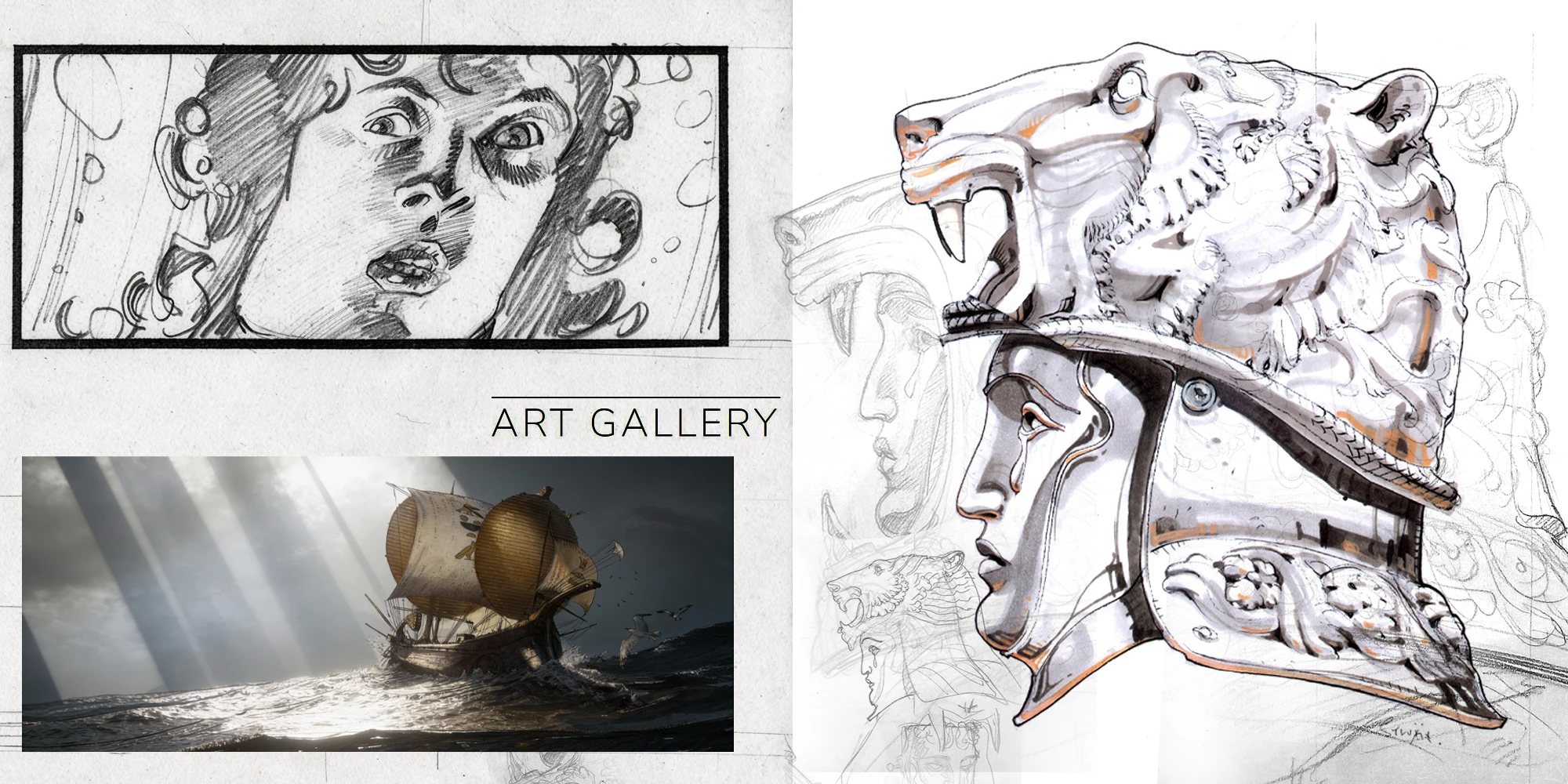
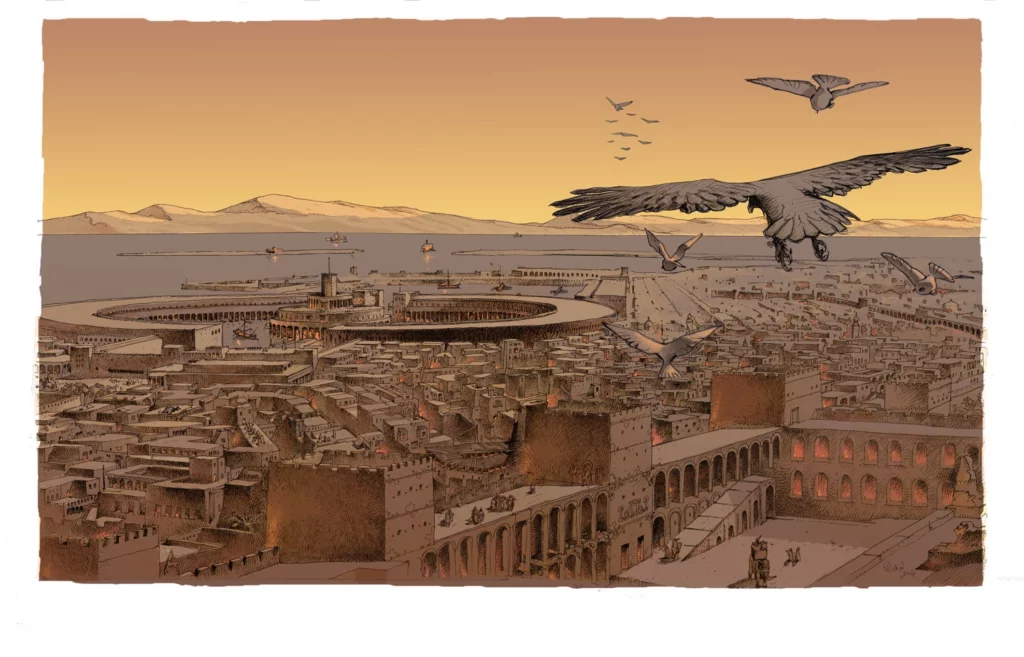
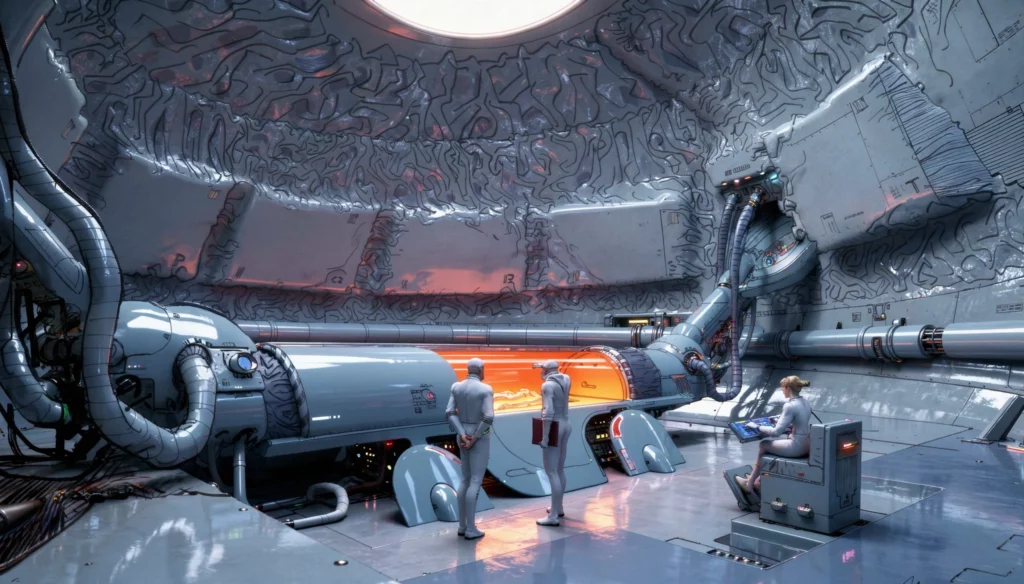
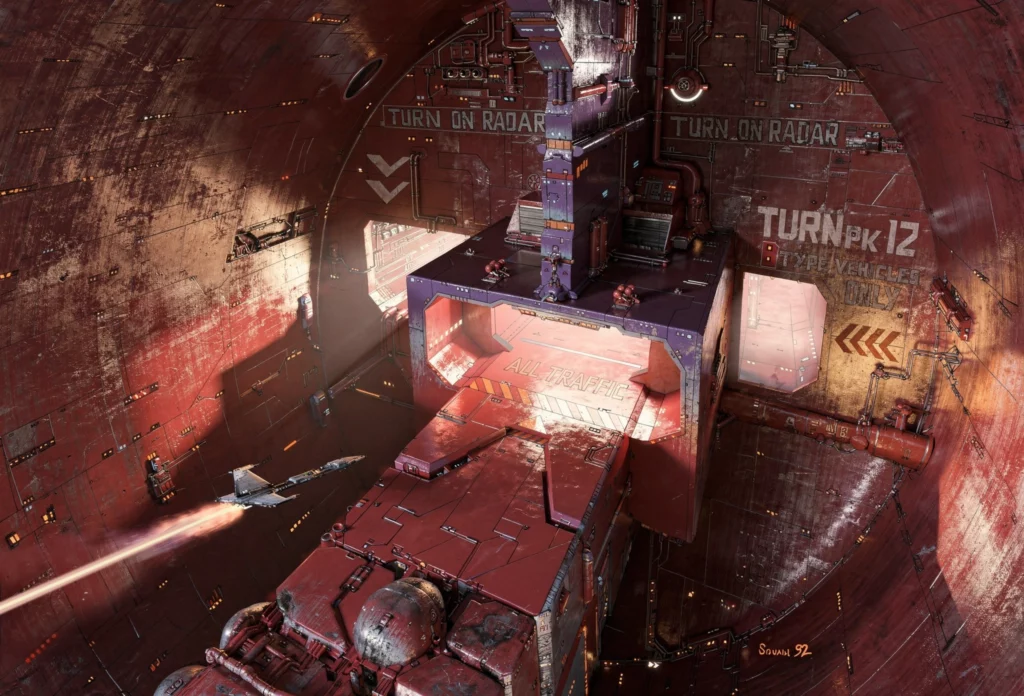
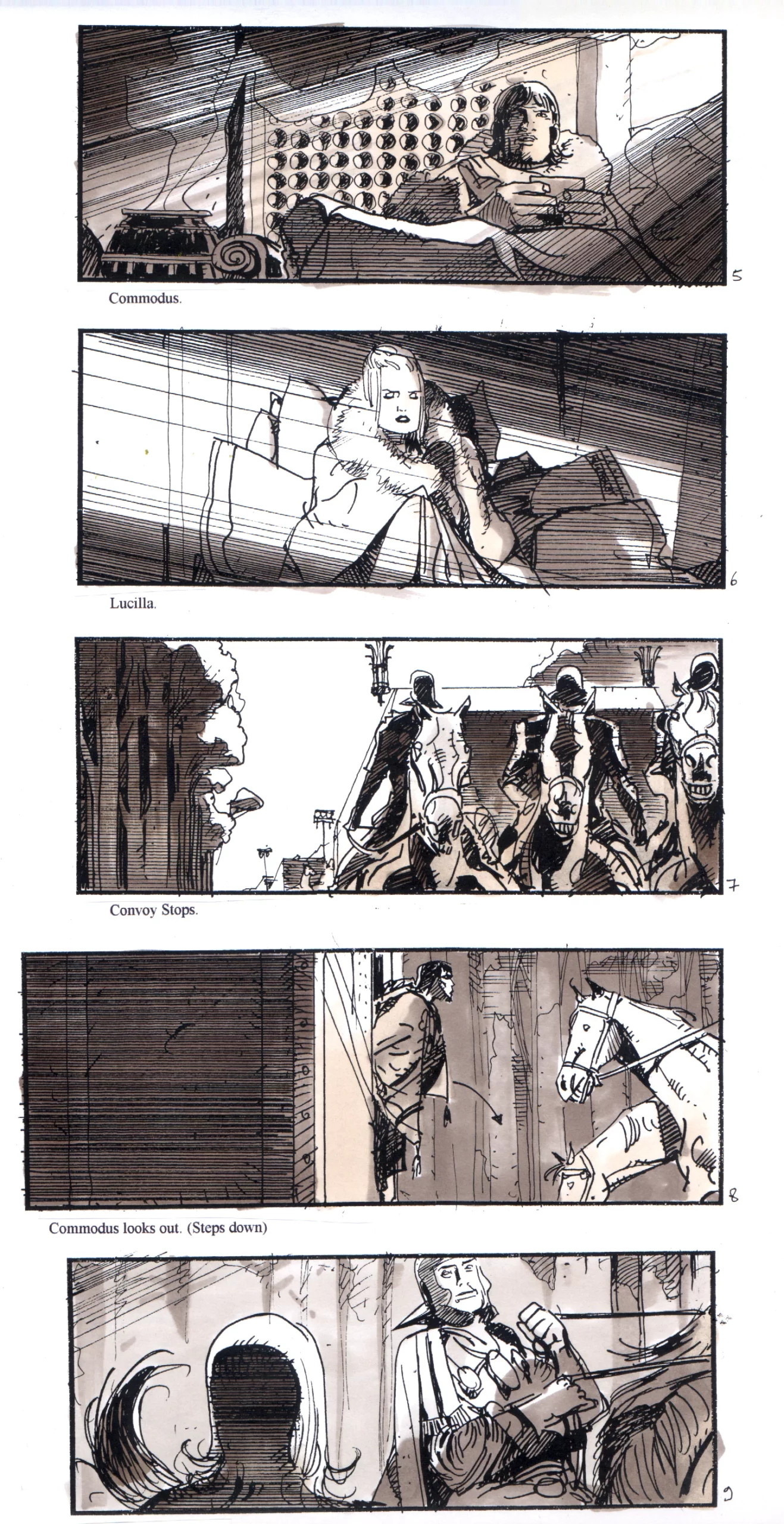
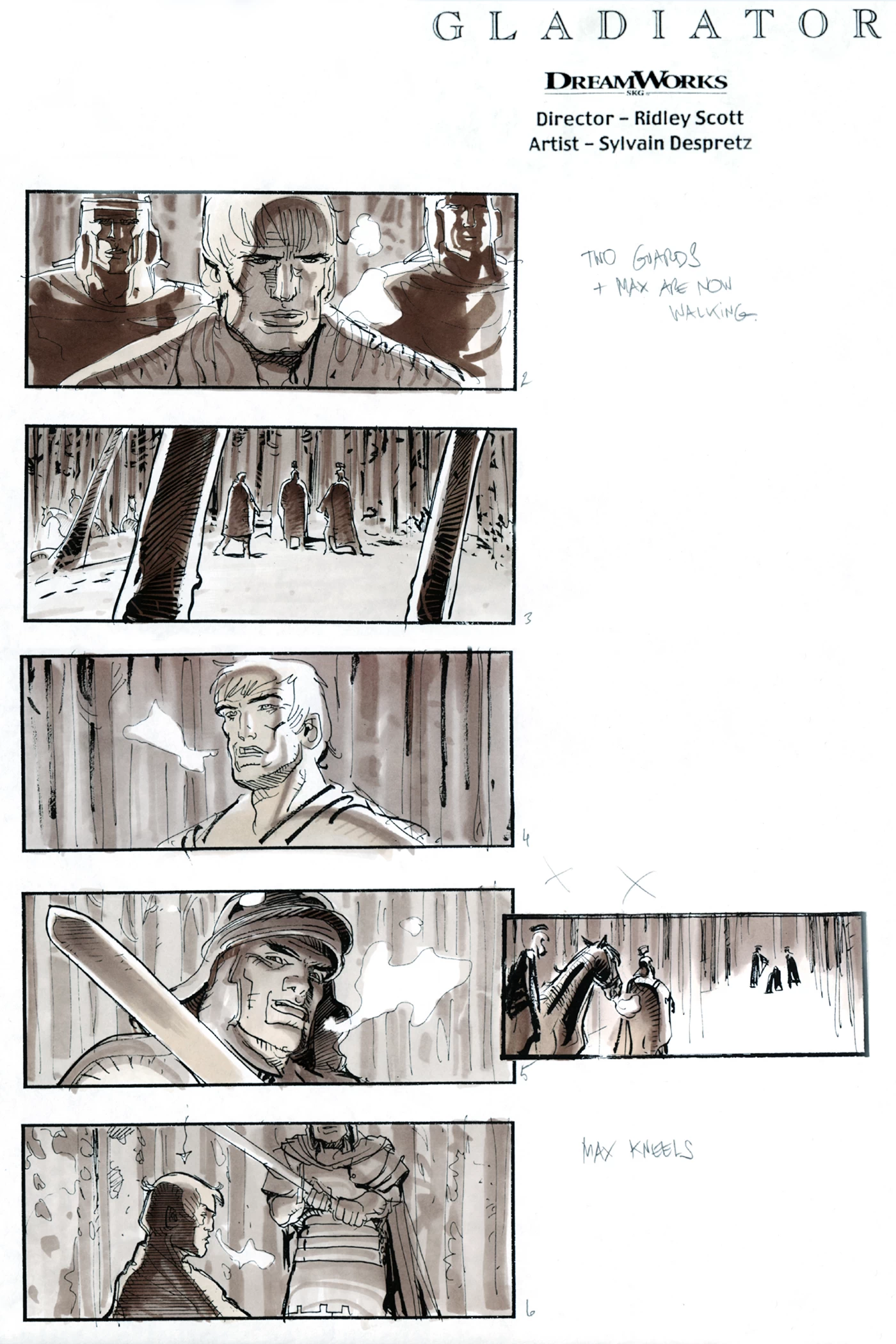
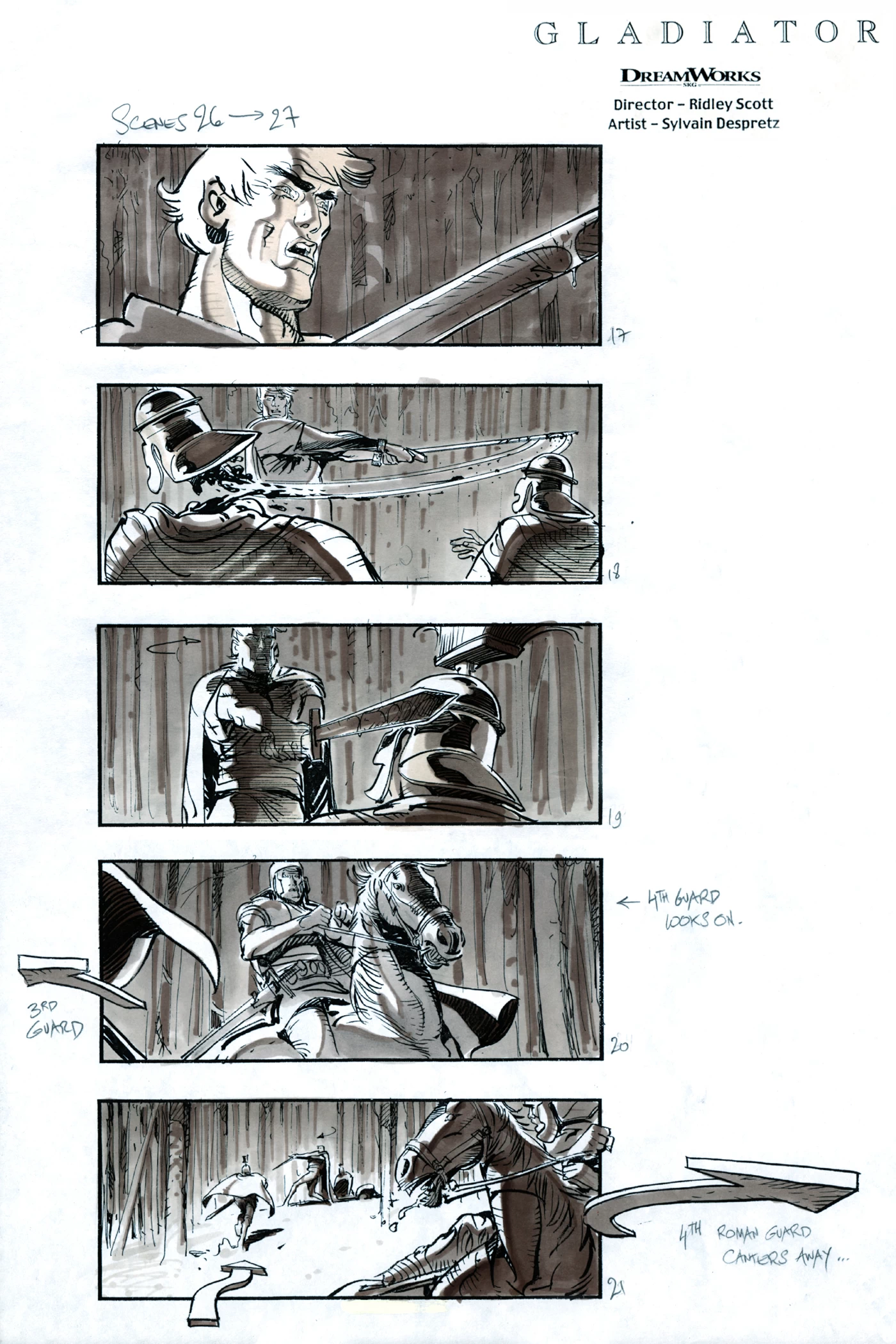
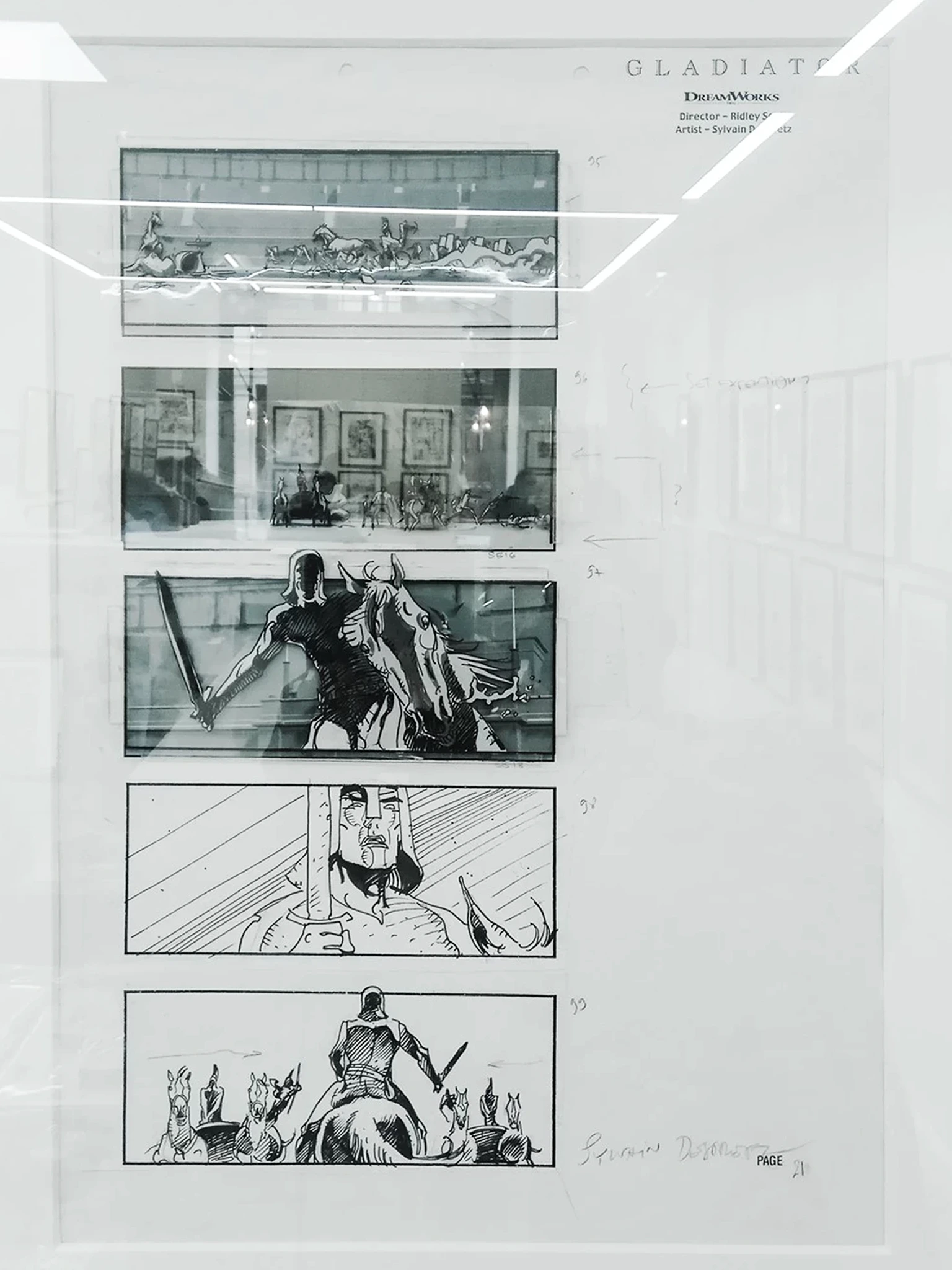
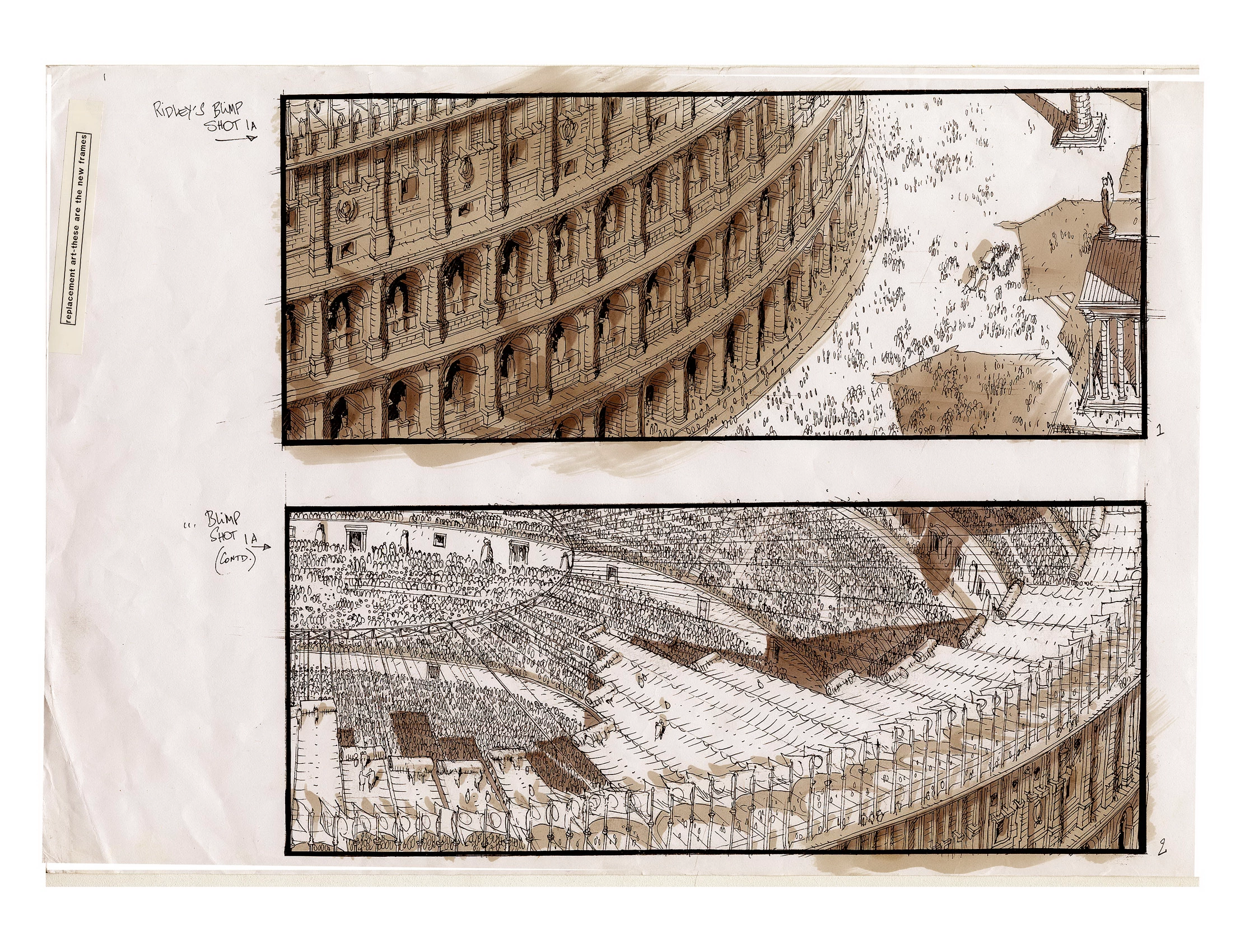
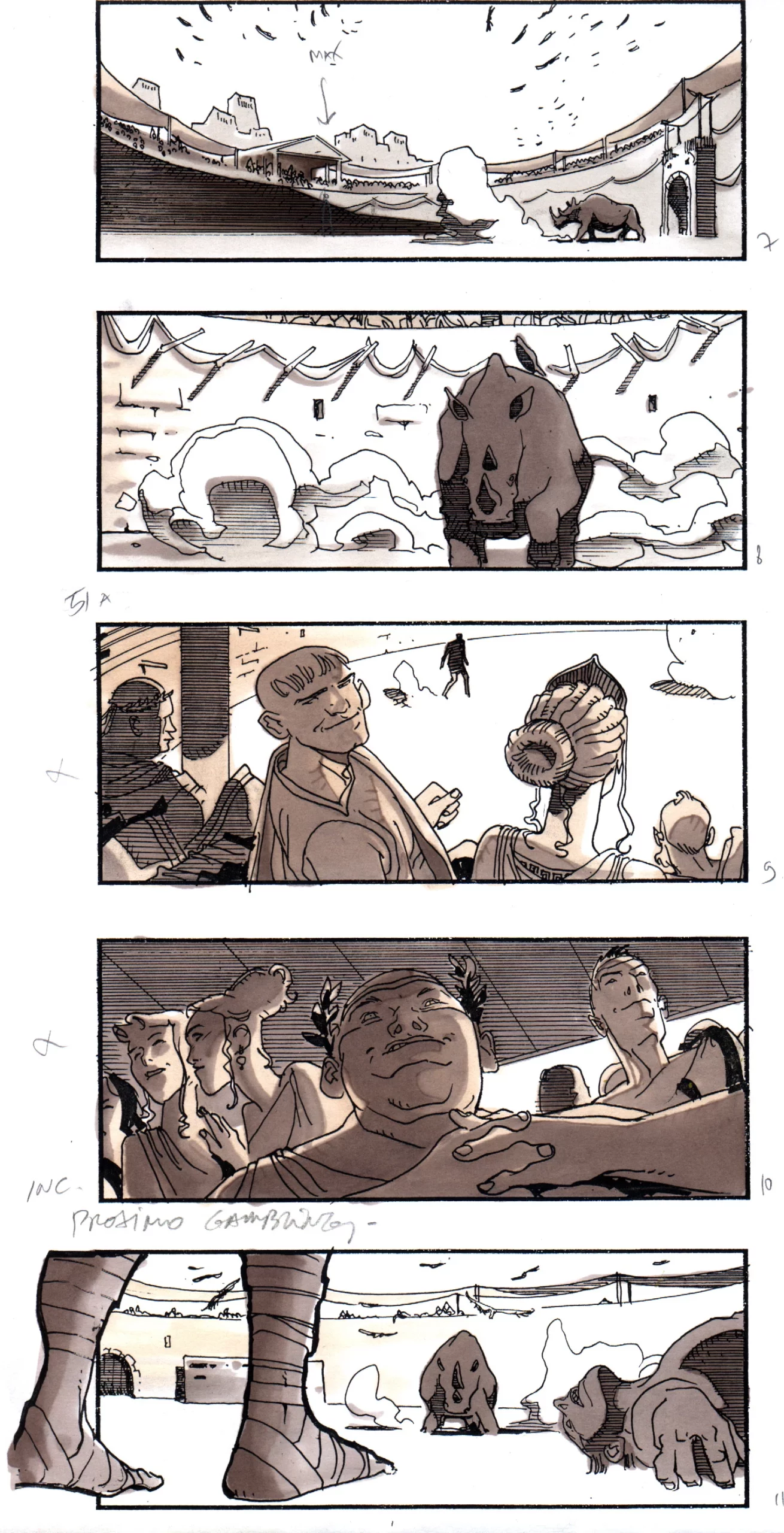
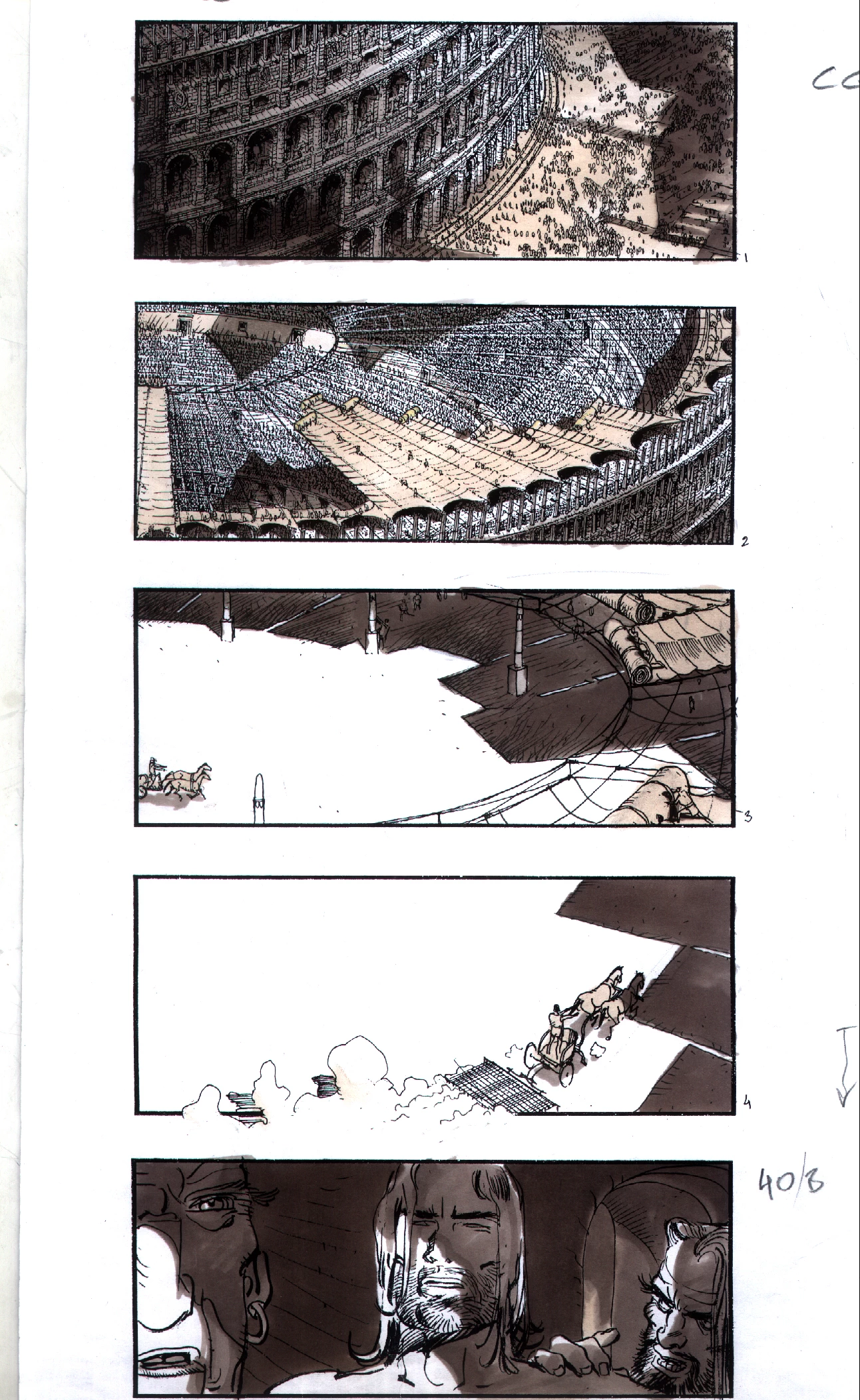
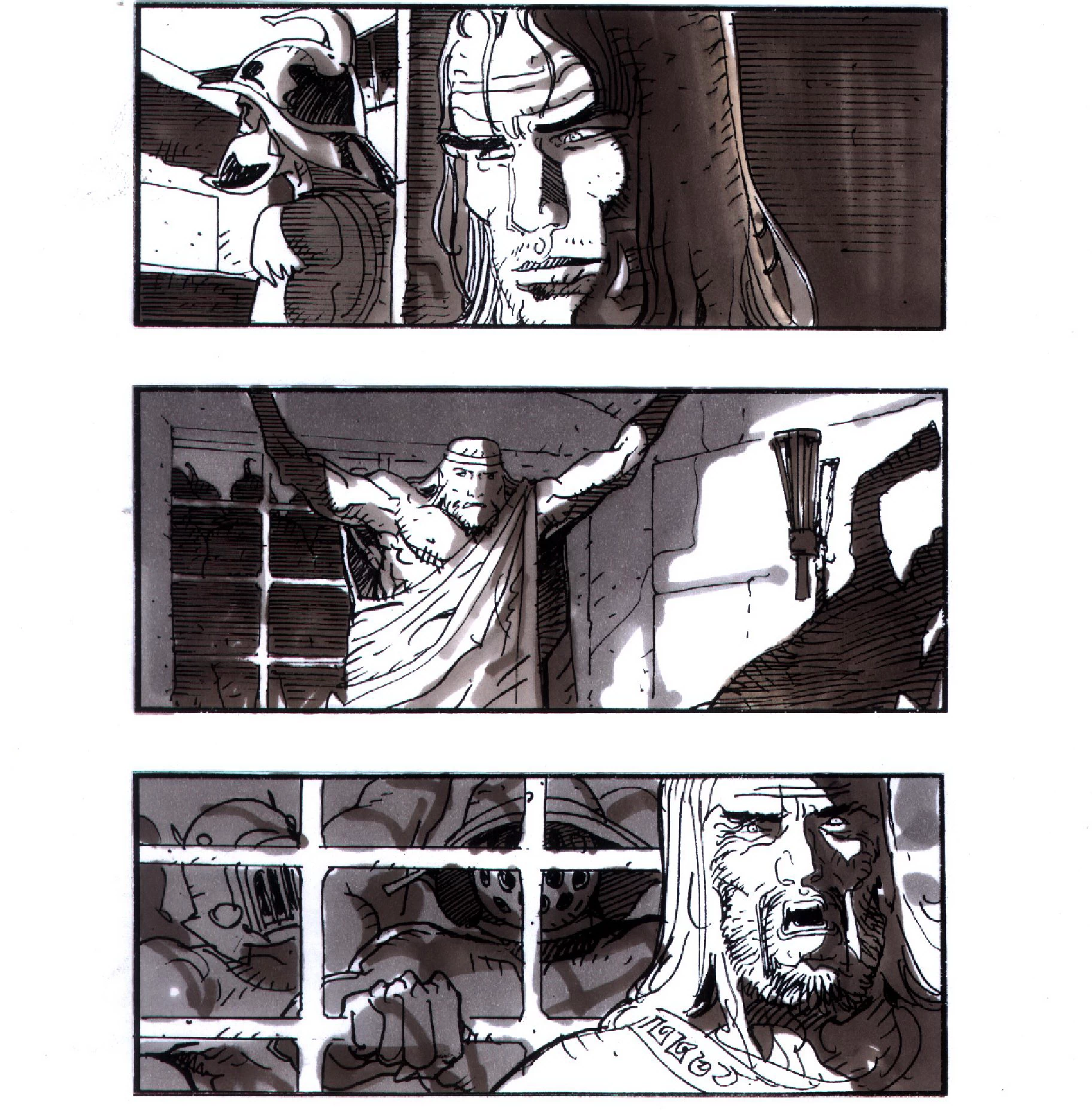
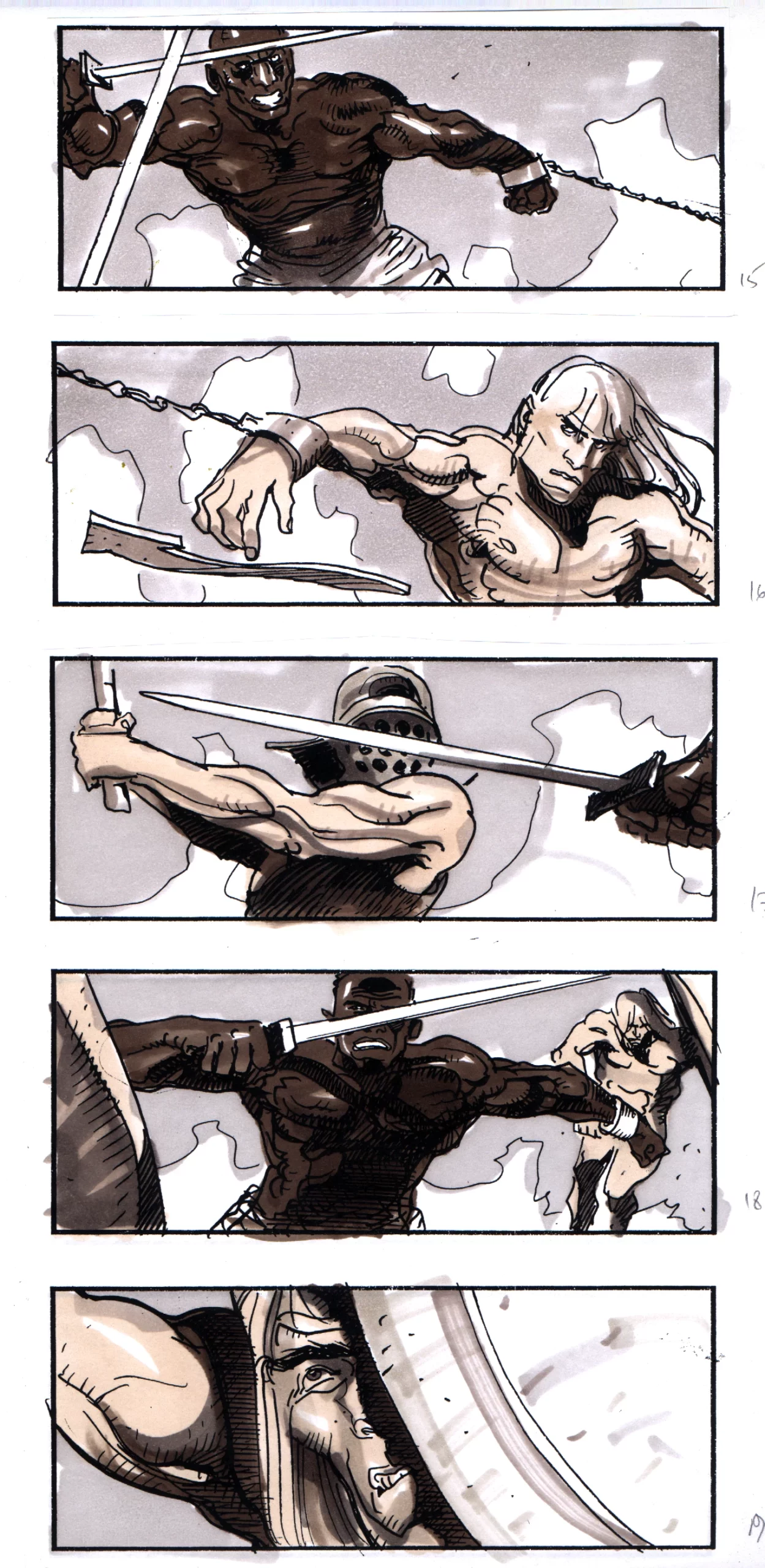
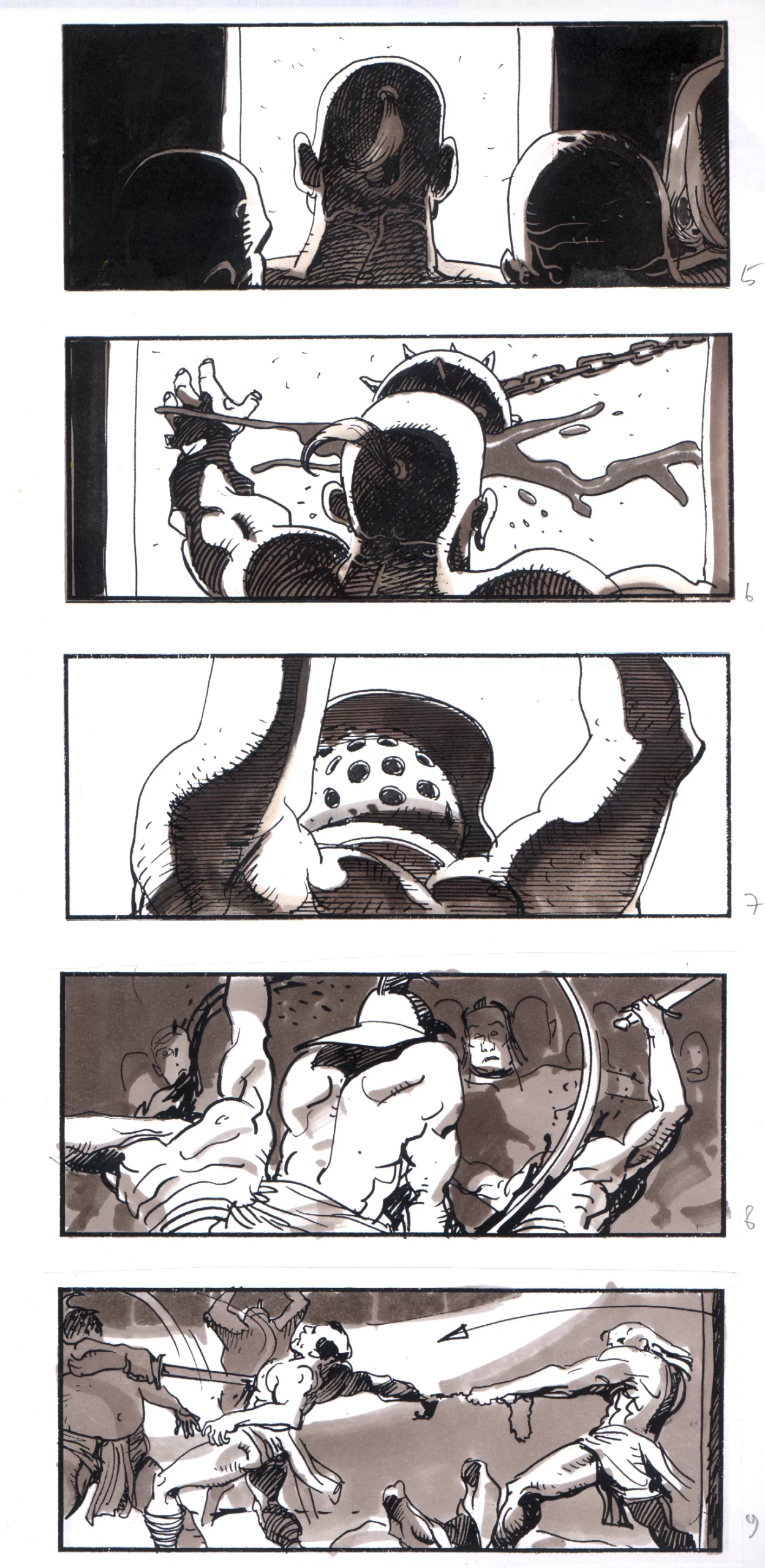
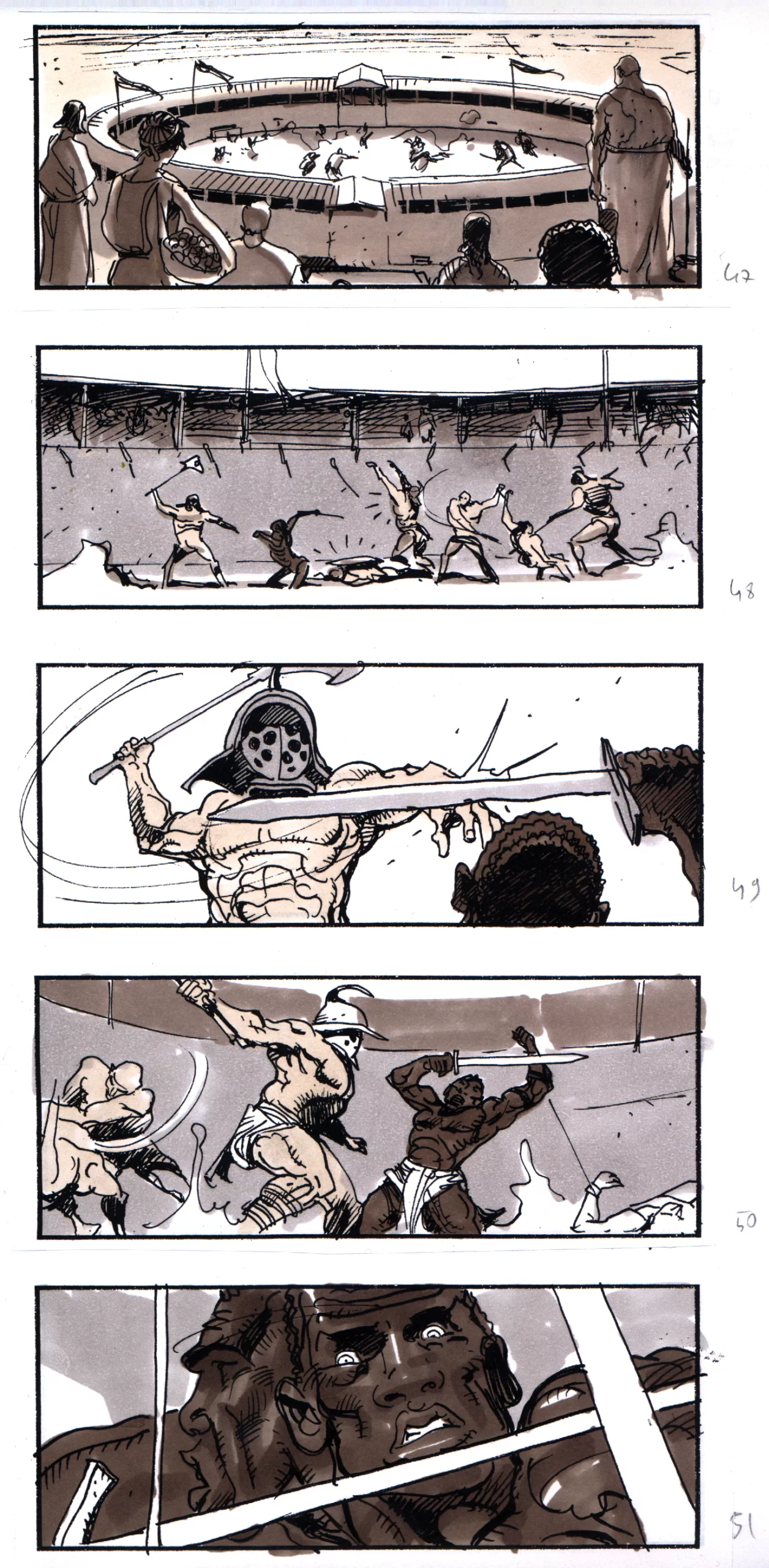
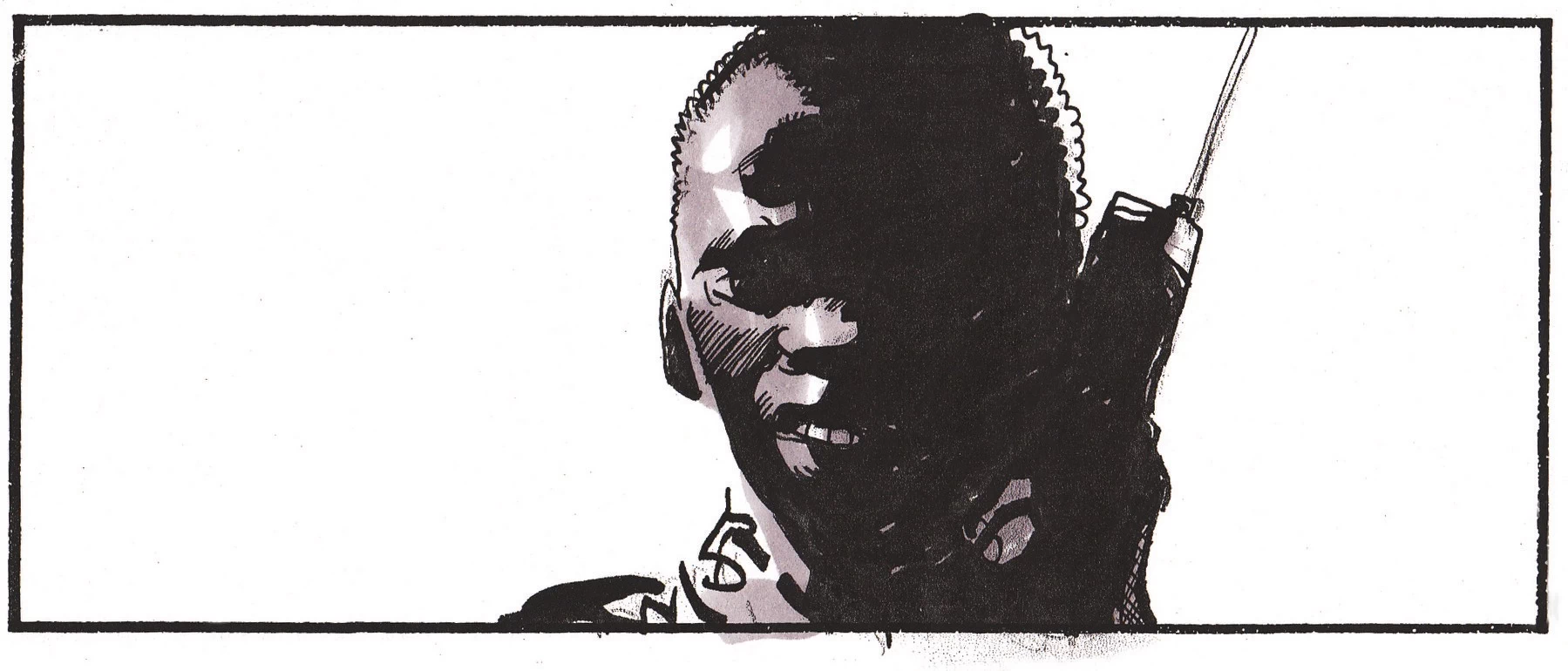
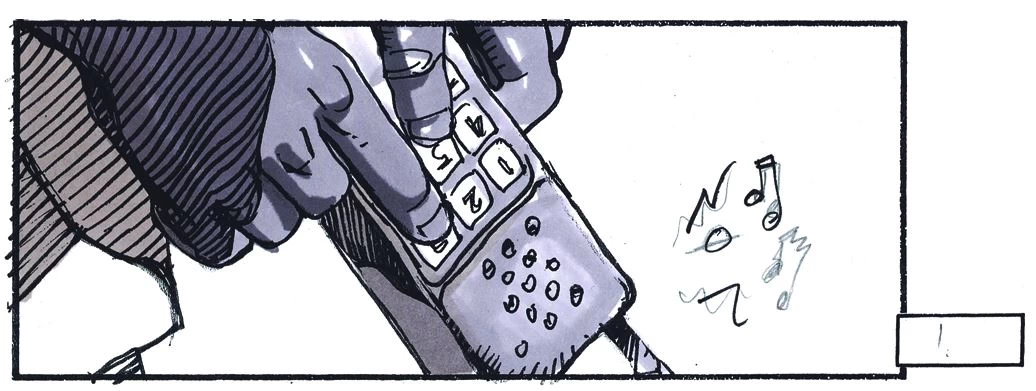
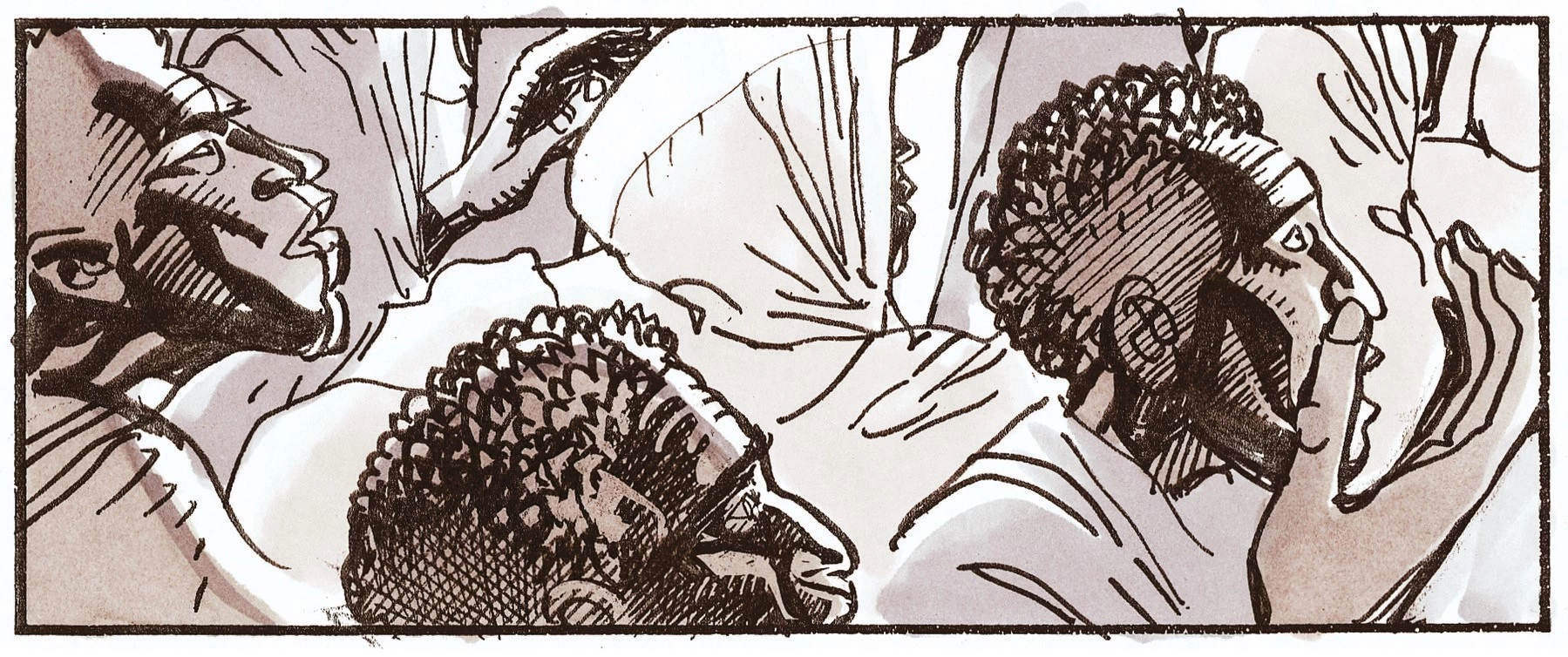
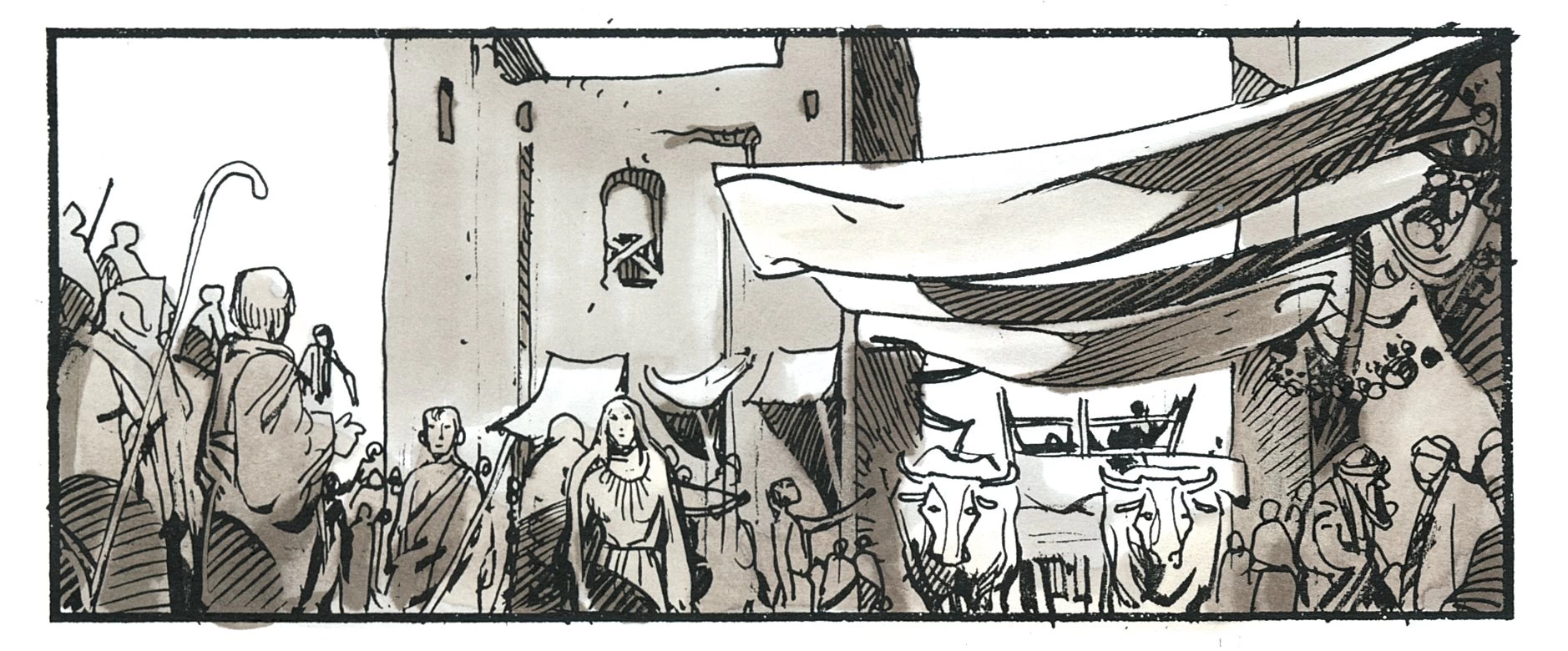
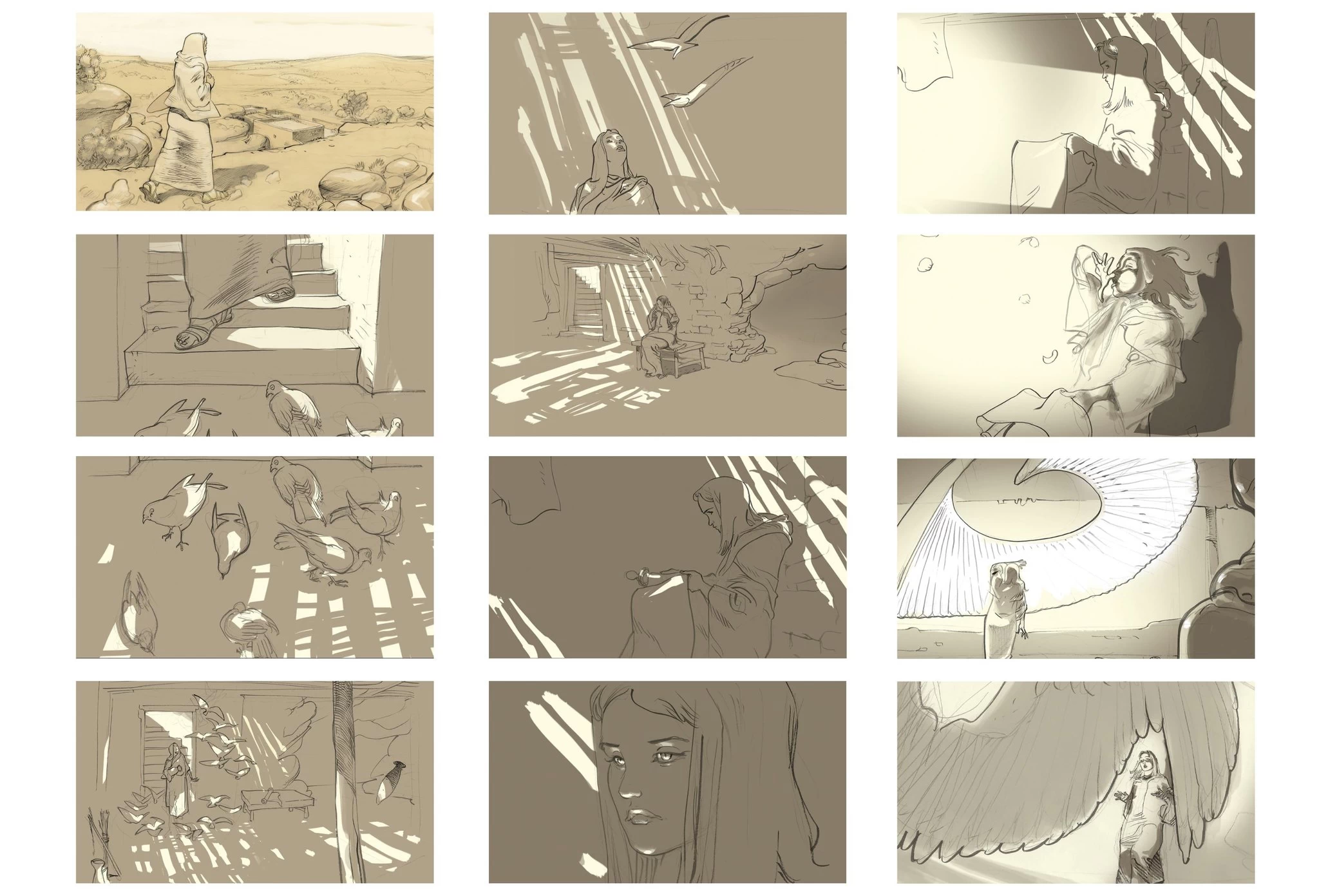
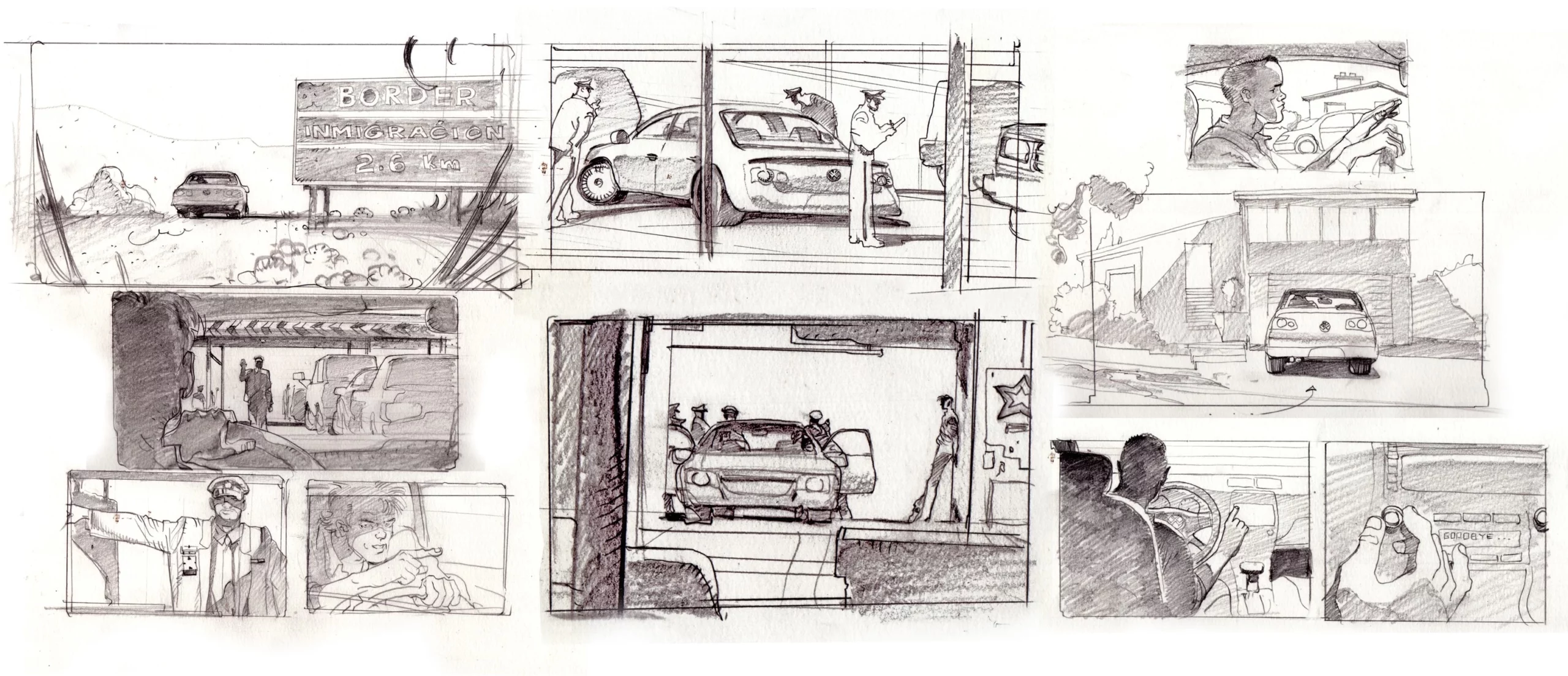
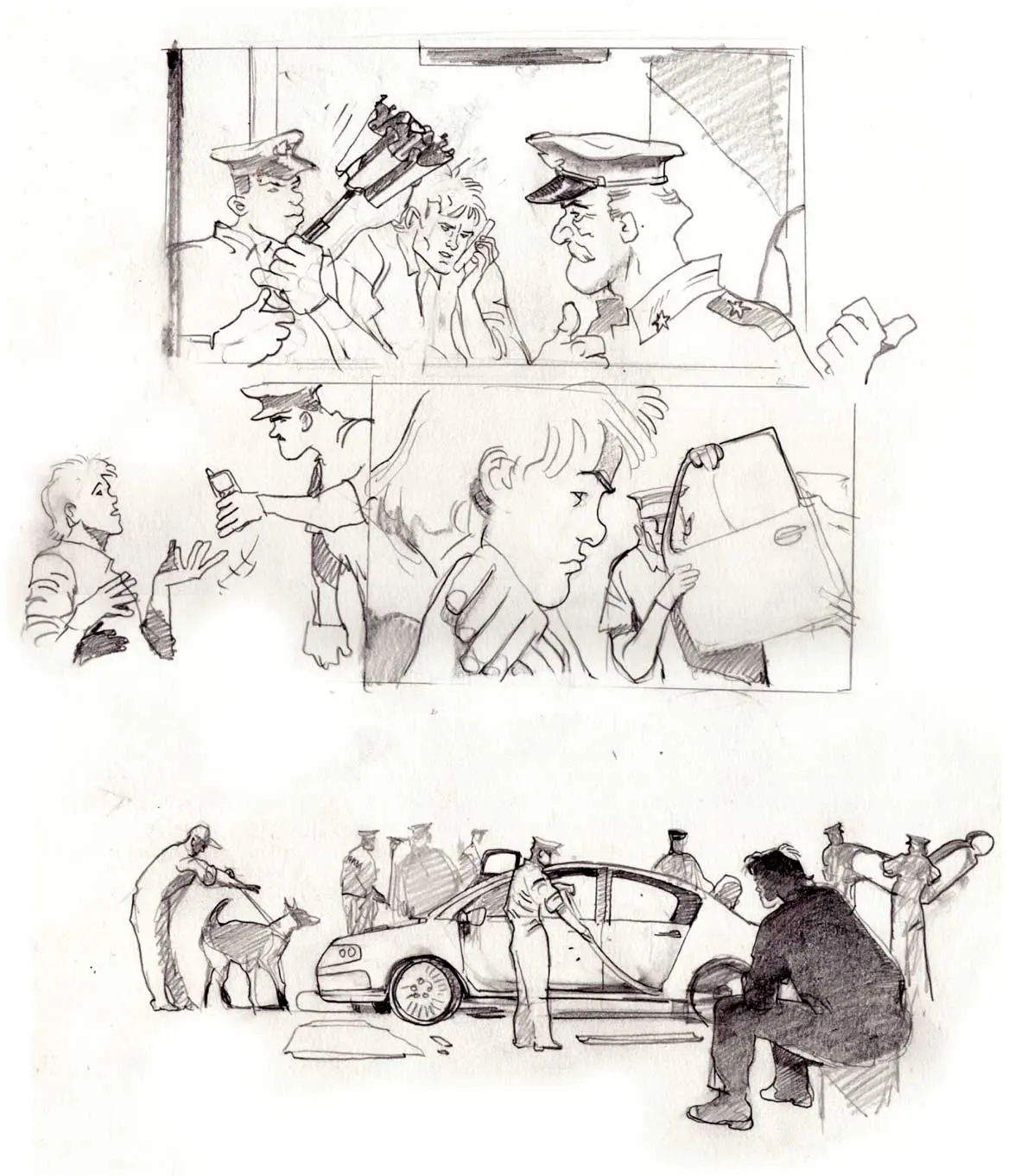
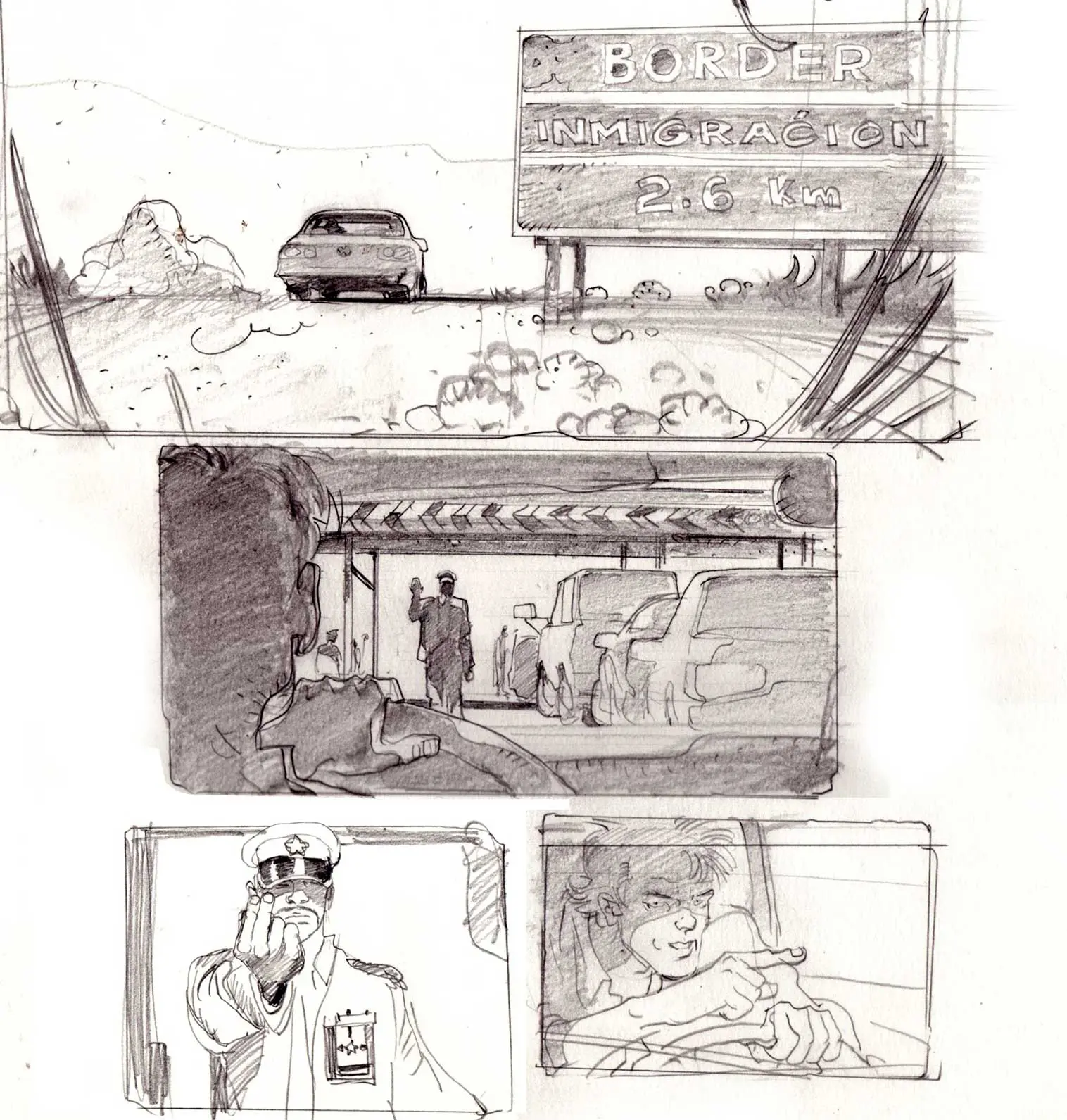
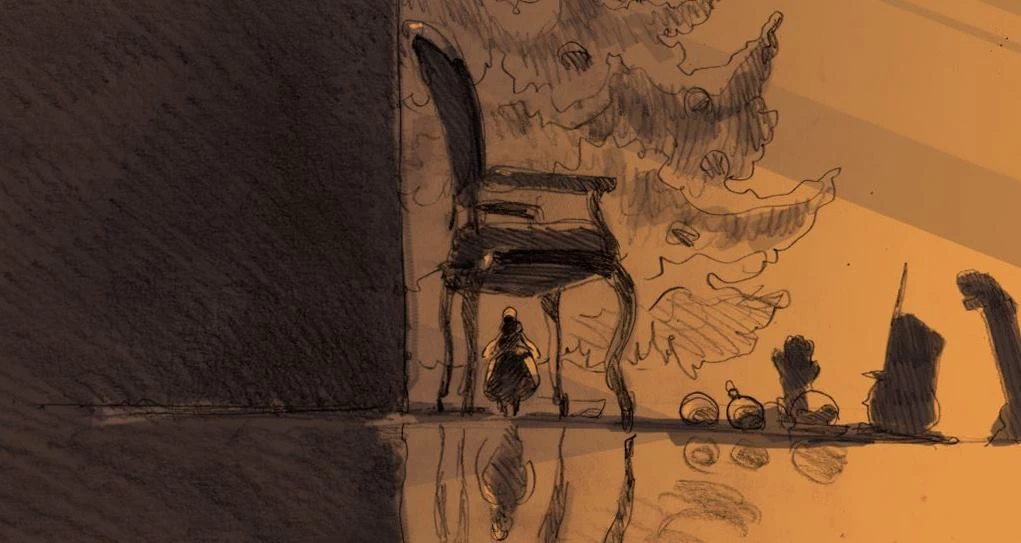
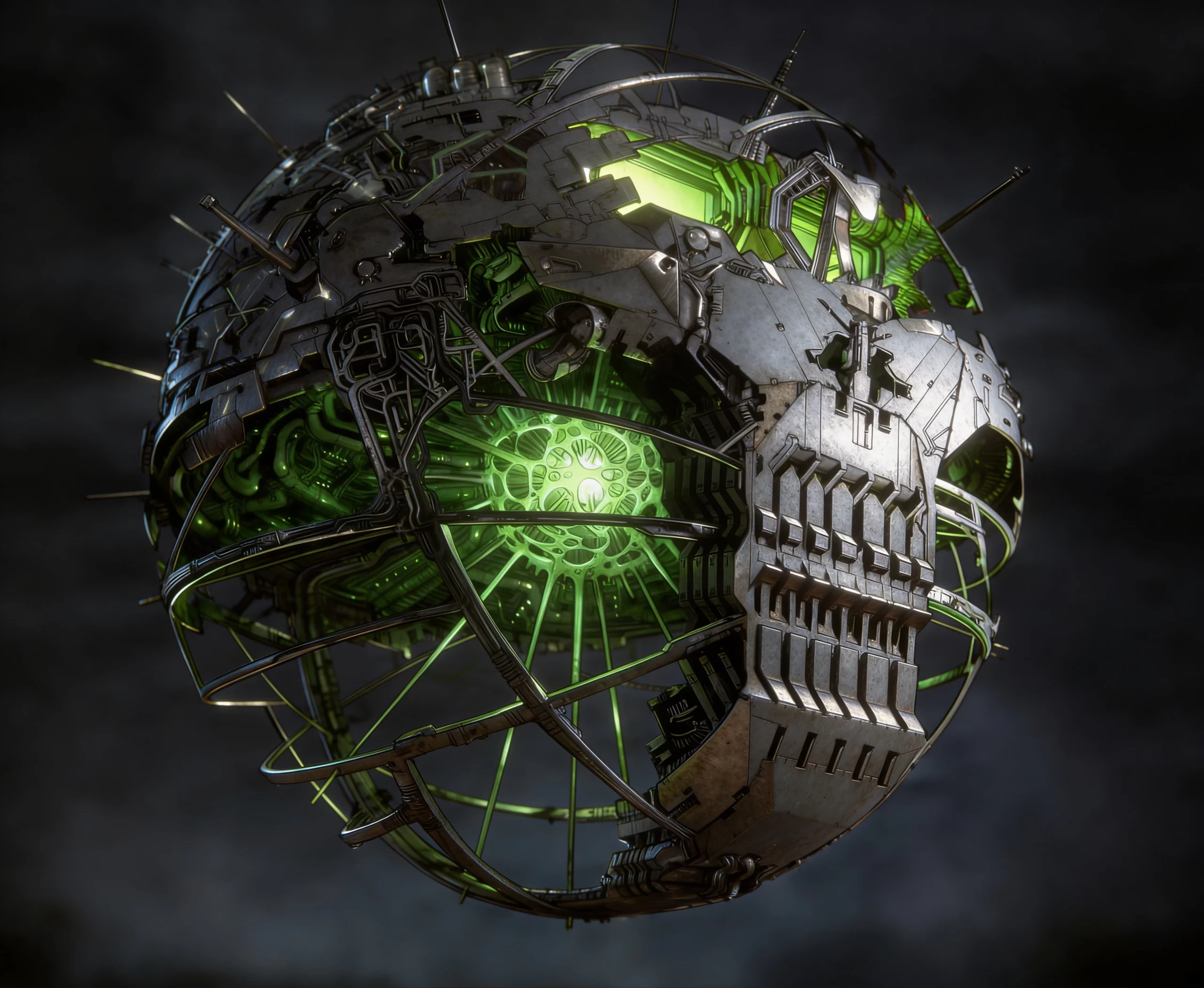
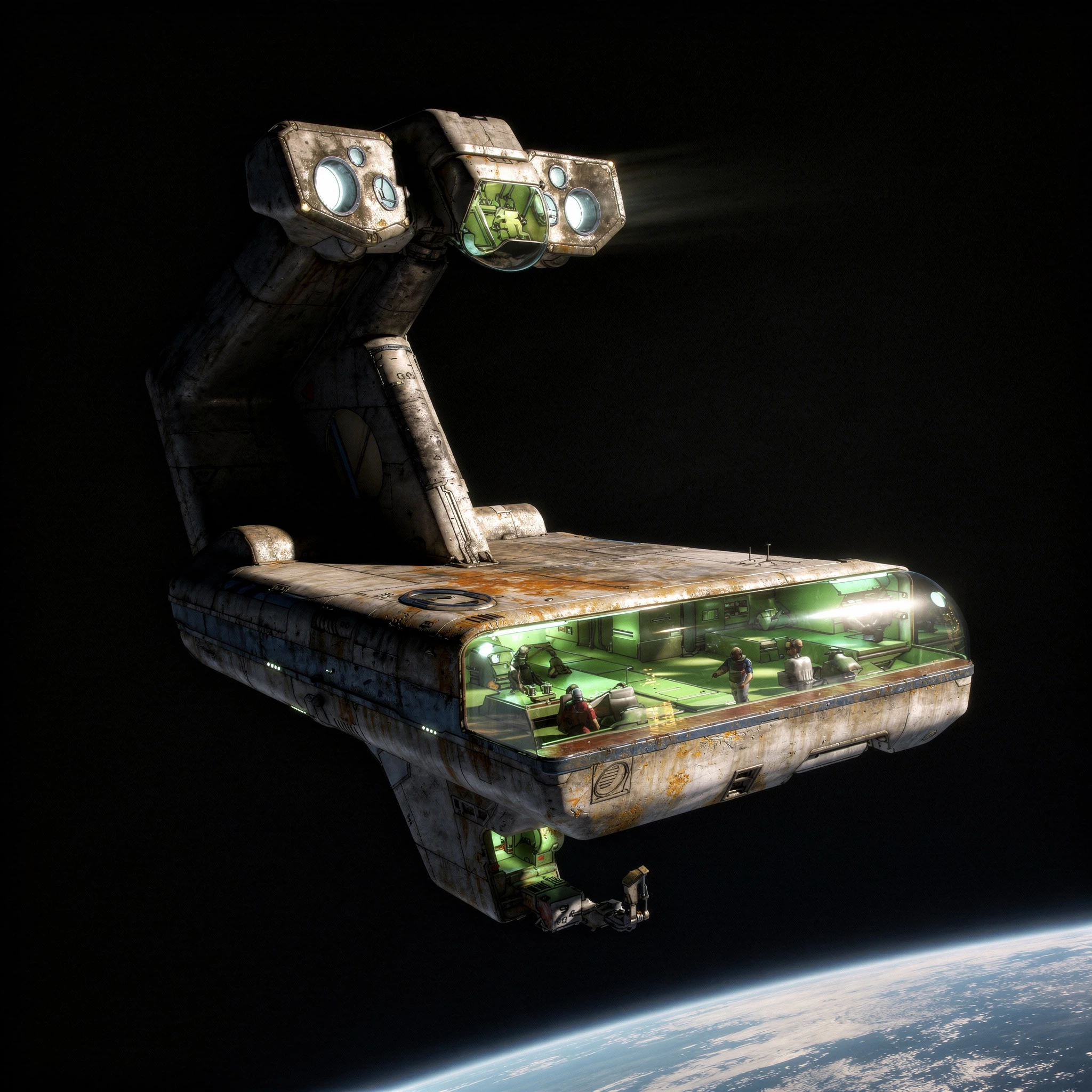
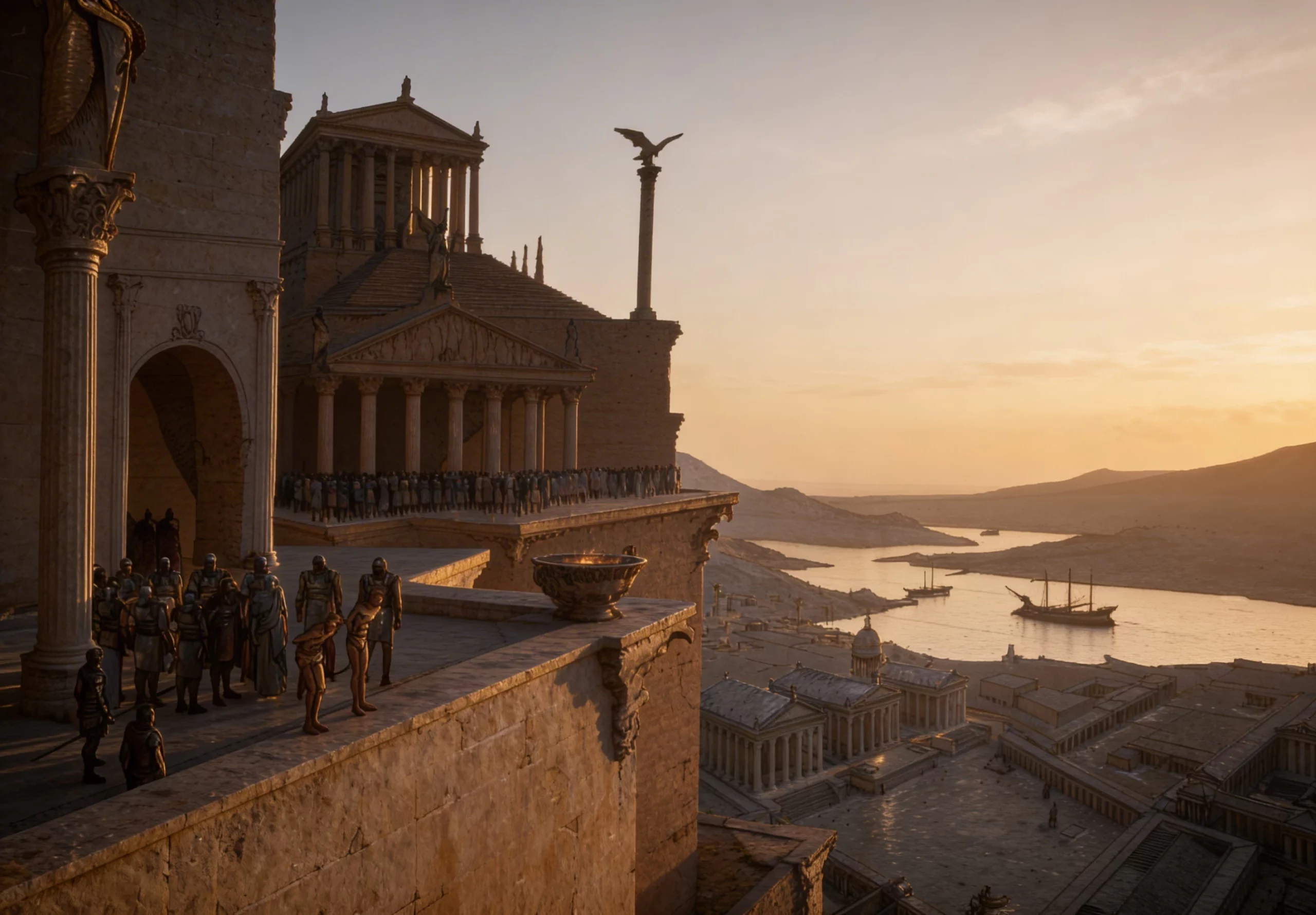
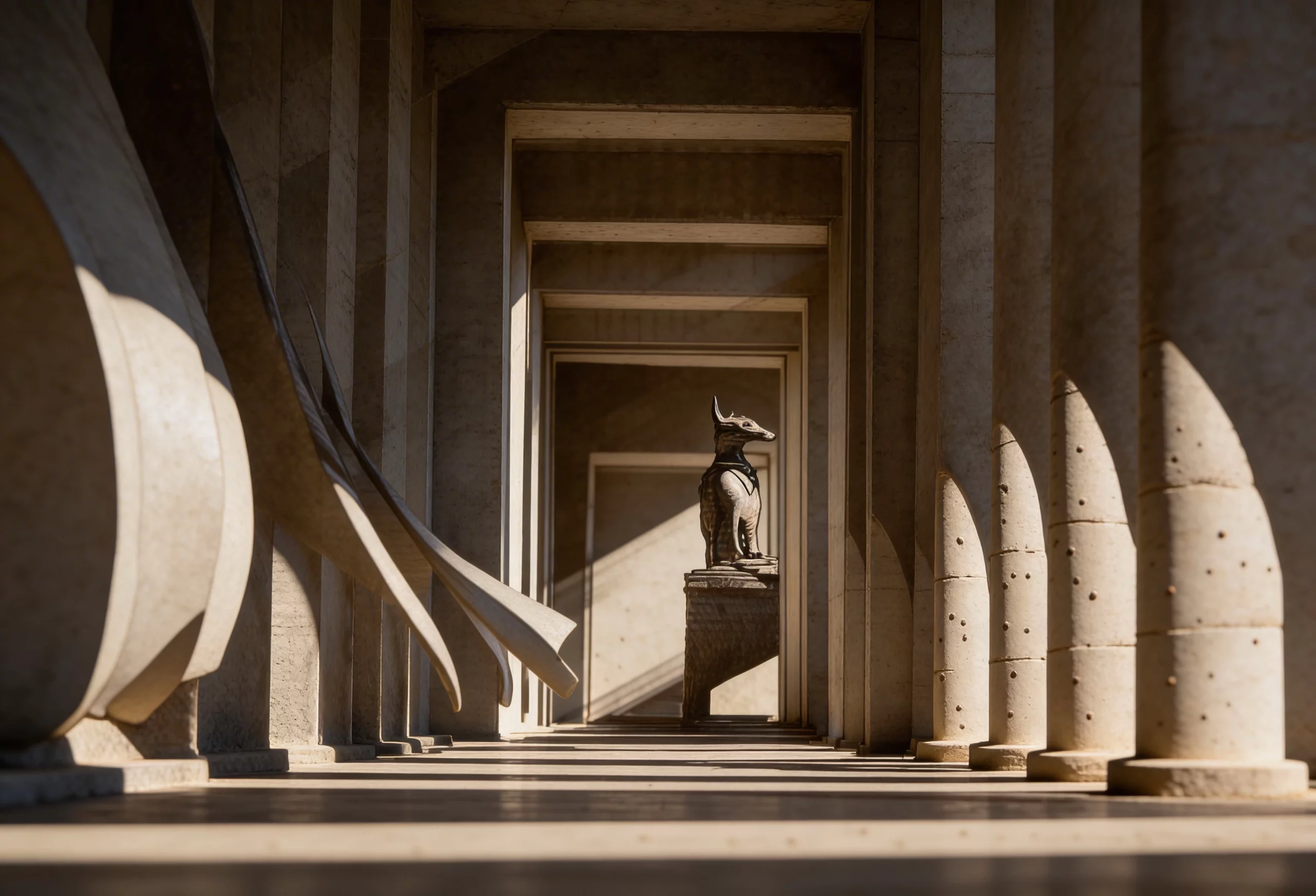
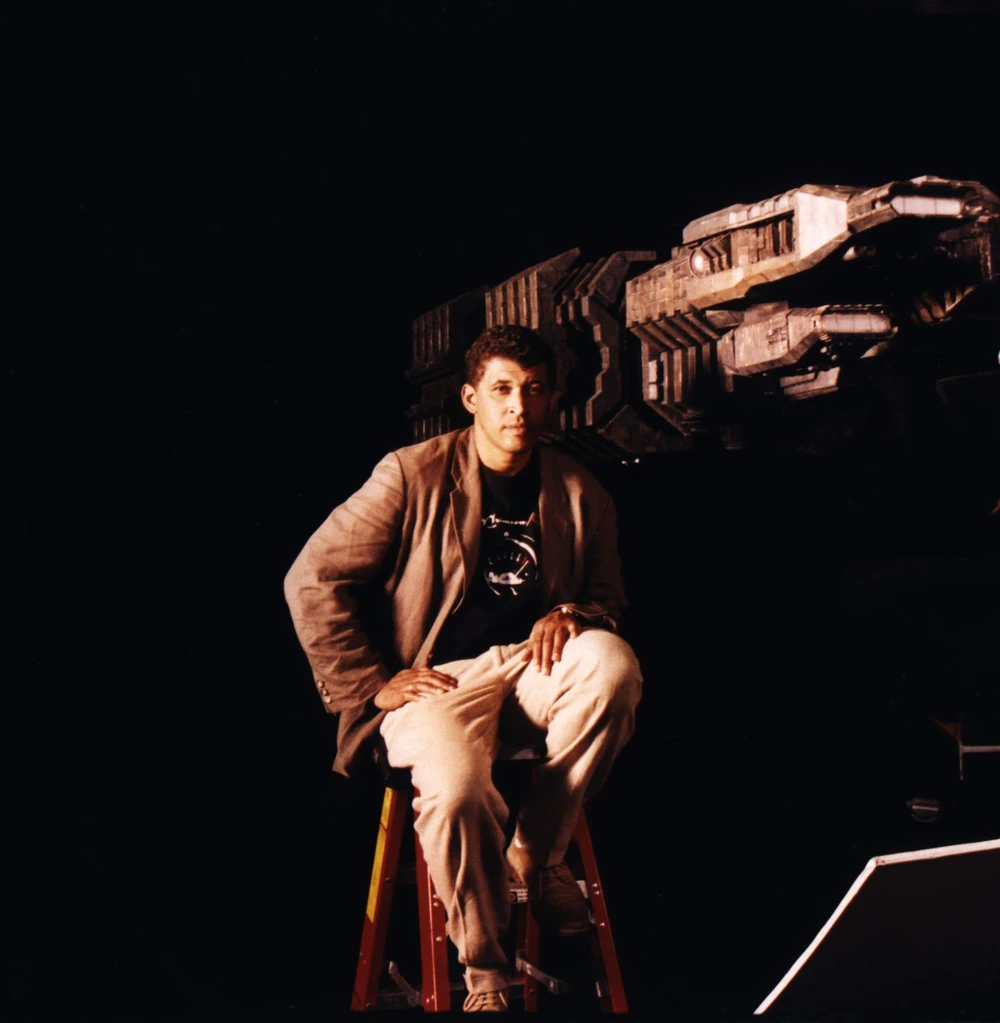
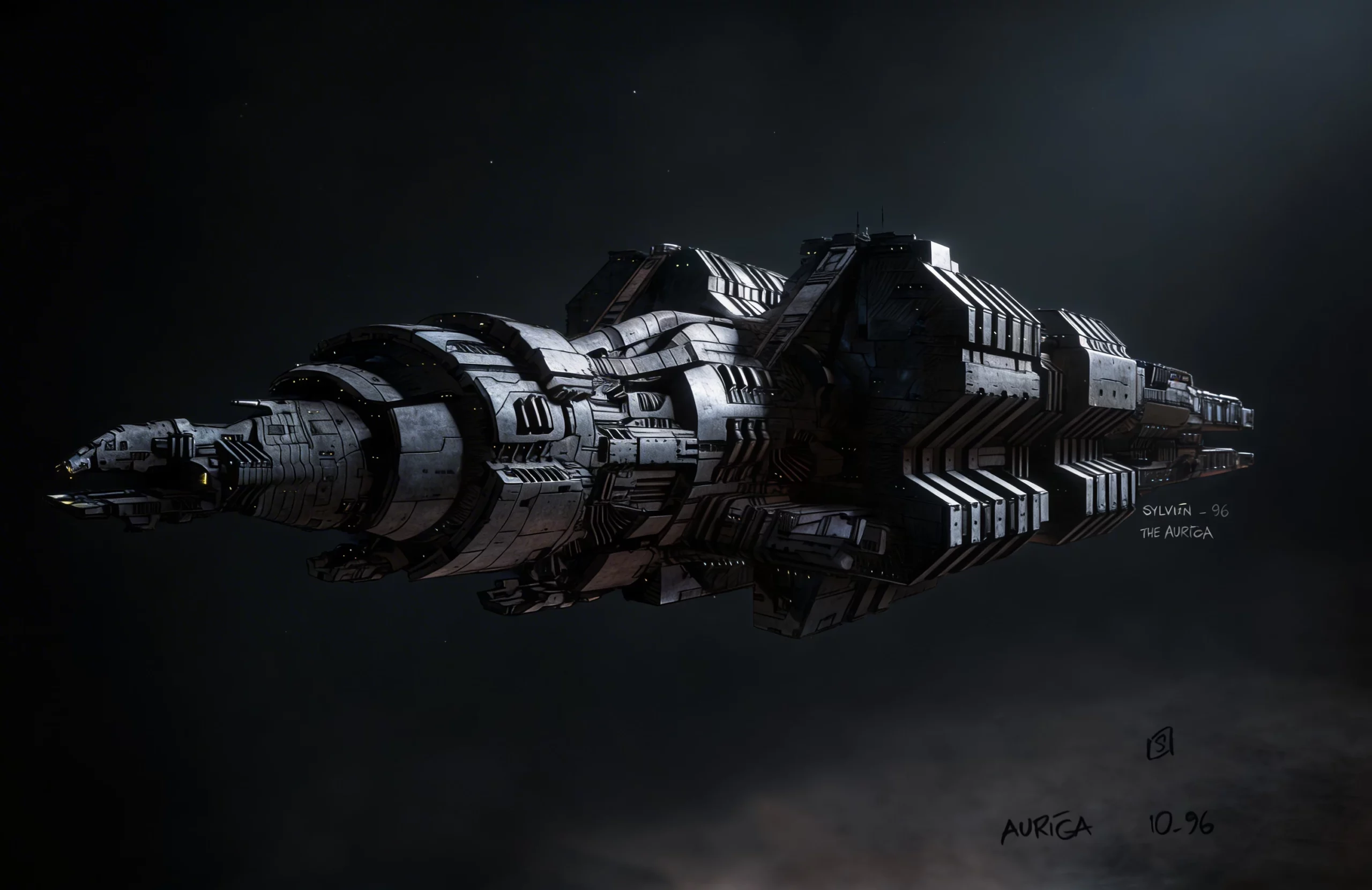
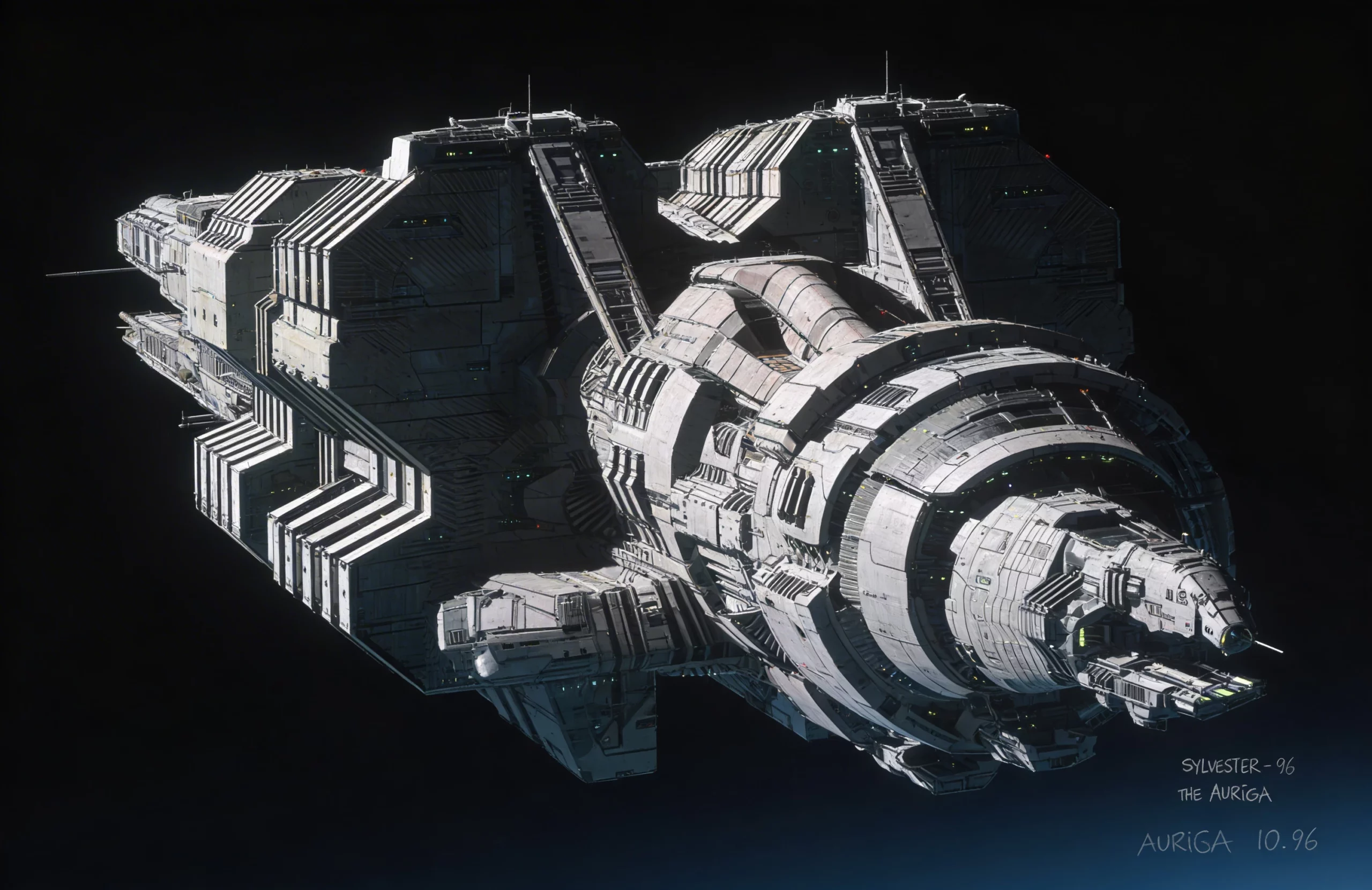
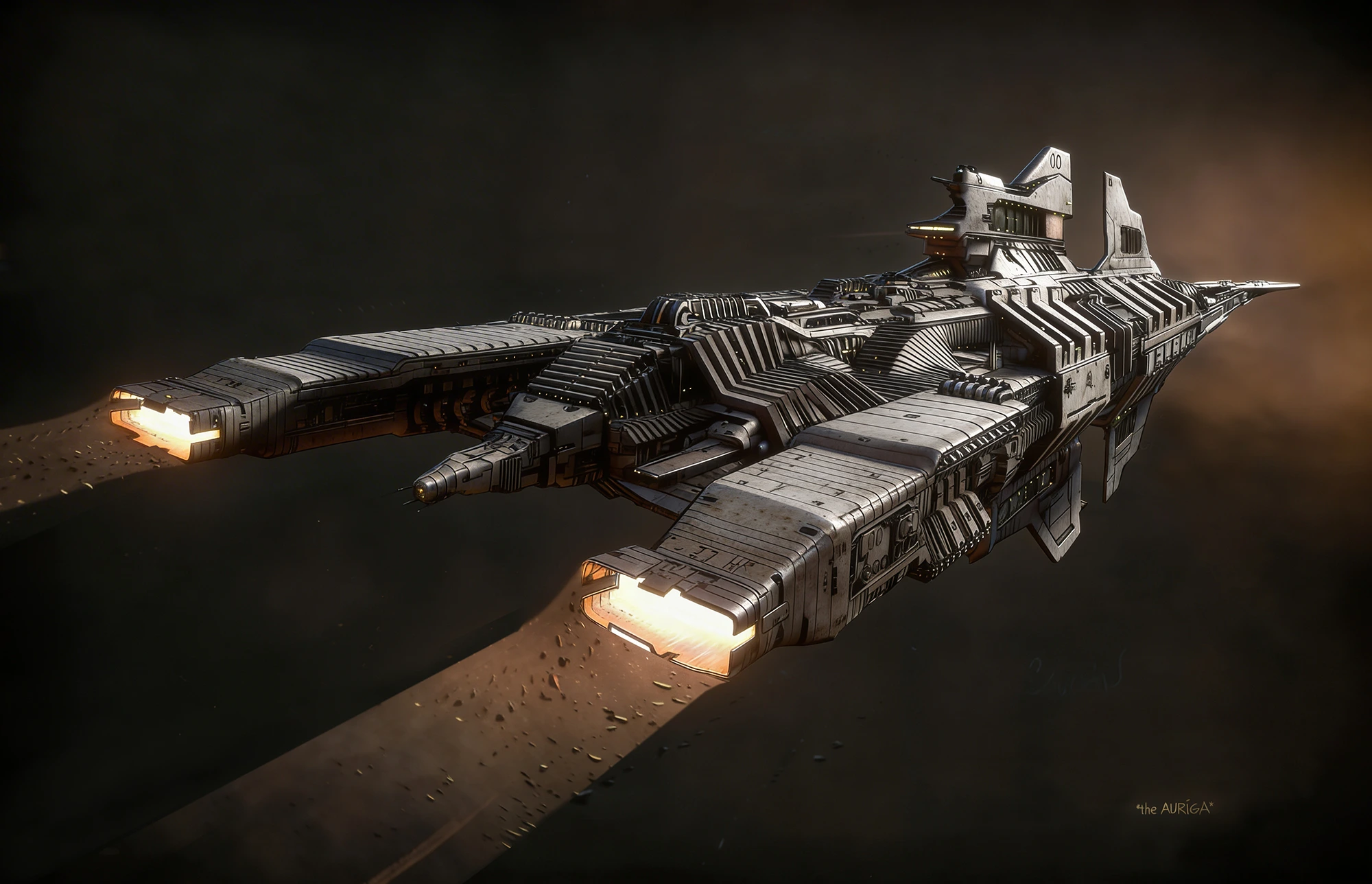
Sylvain Despretz worked internationally as a storyboard and concept artist until 2023.
Concept and storyboard art are commonplace in the film industry.
They primarily help directors visualize the film and establish consensus with various departments, chief among them the design department, who has the task of budgeting and building sets and props alike.
In addition, this phase of the work allows a producer to establish that all creations seen in the film will be original, and will not become the source of copyright claims.
What is concept art?
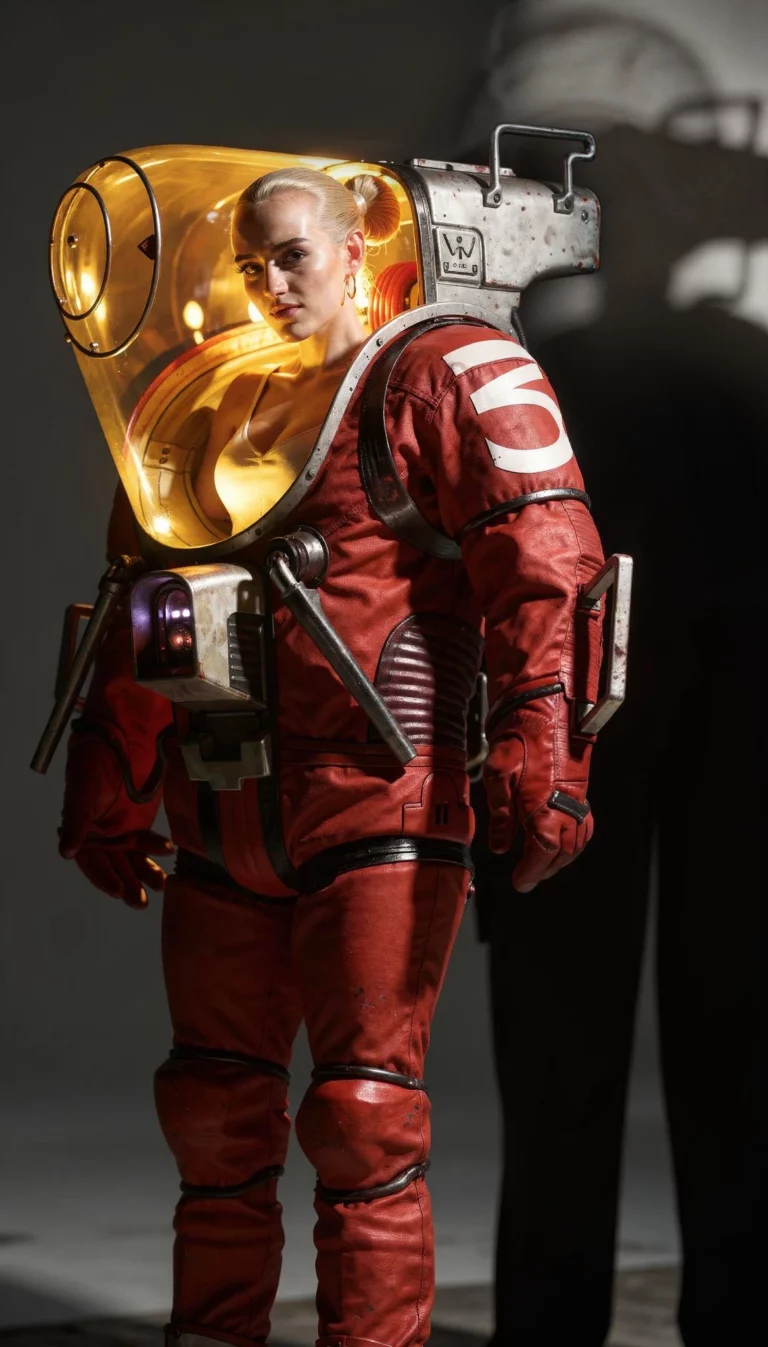
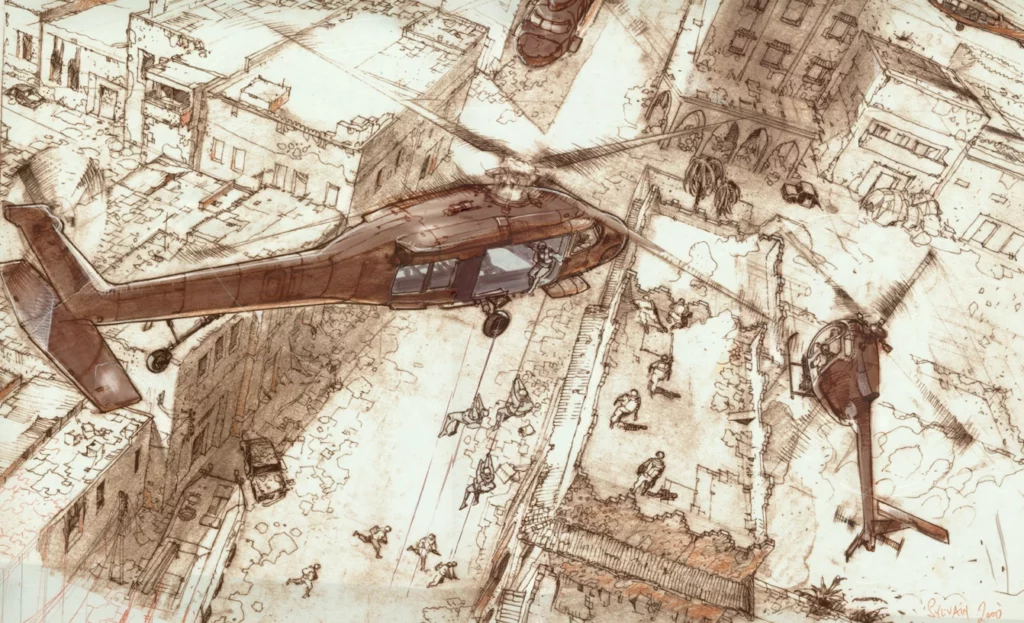
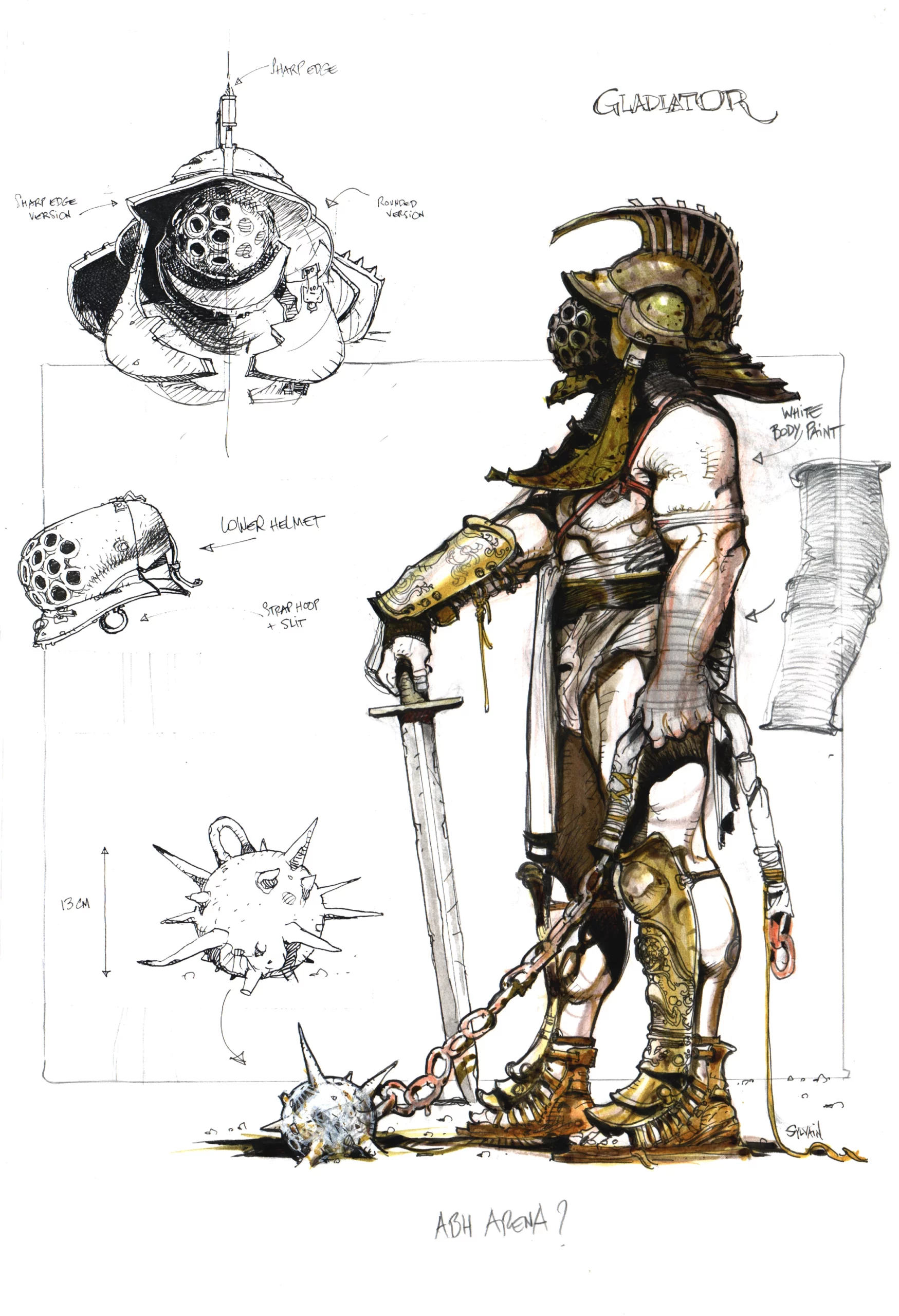
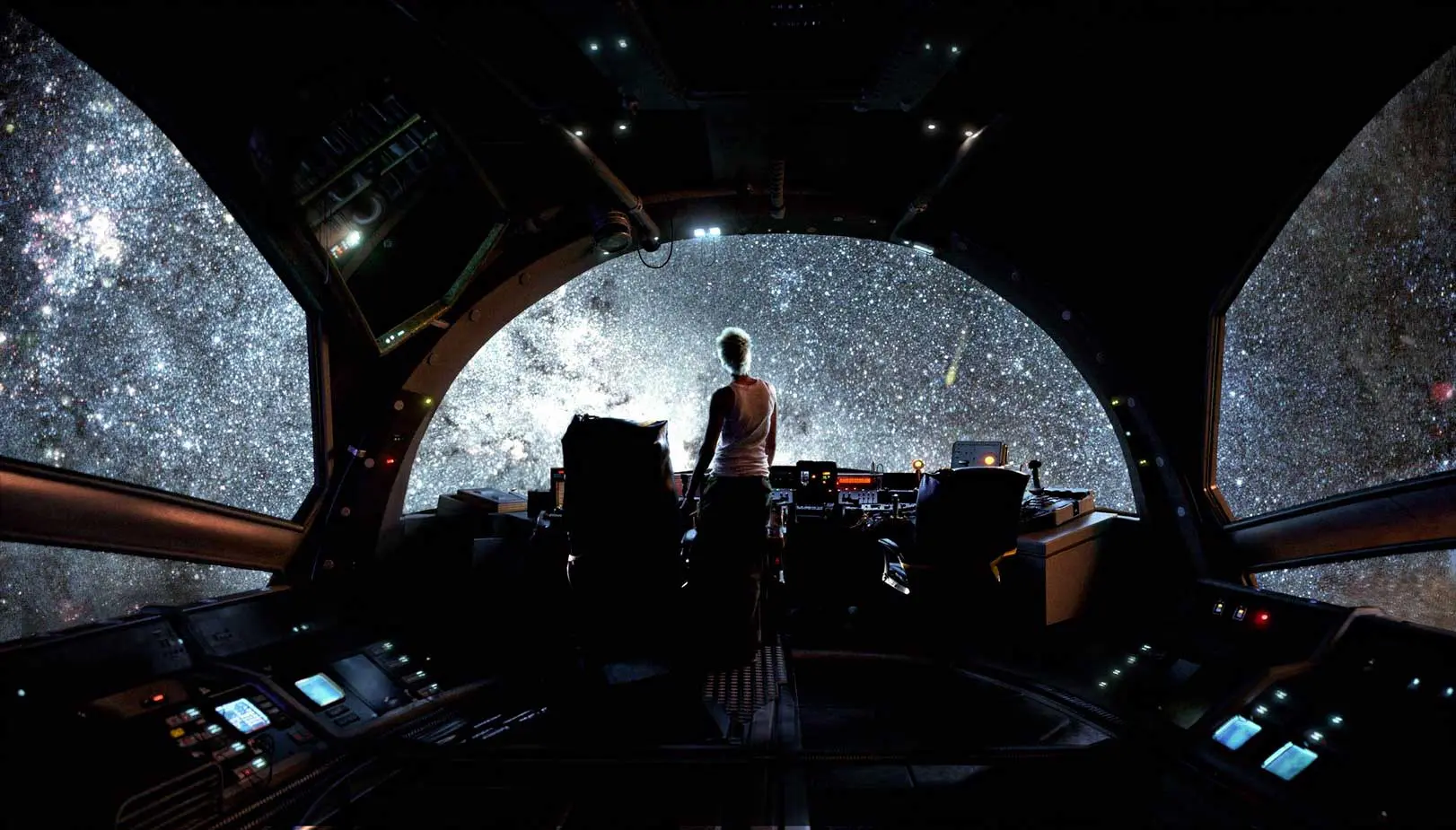
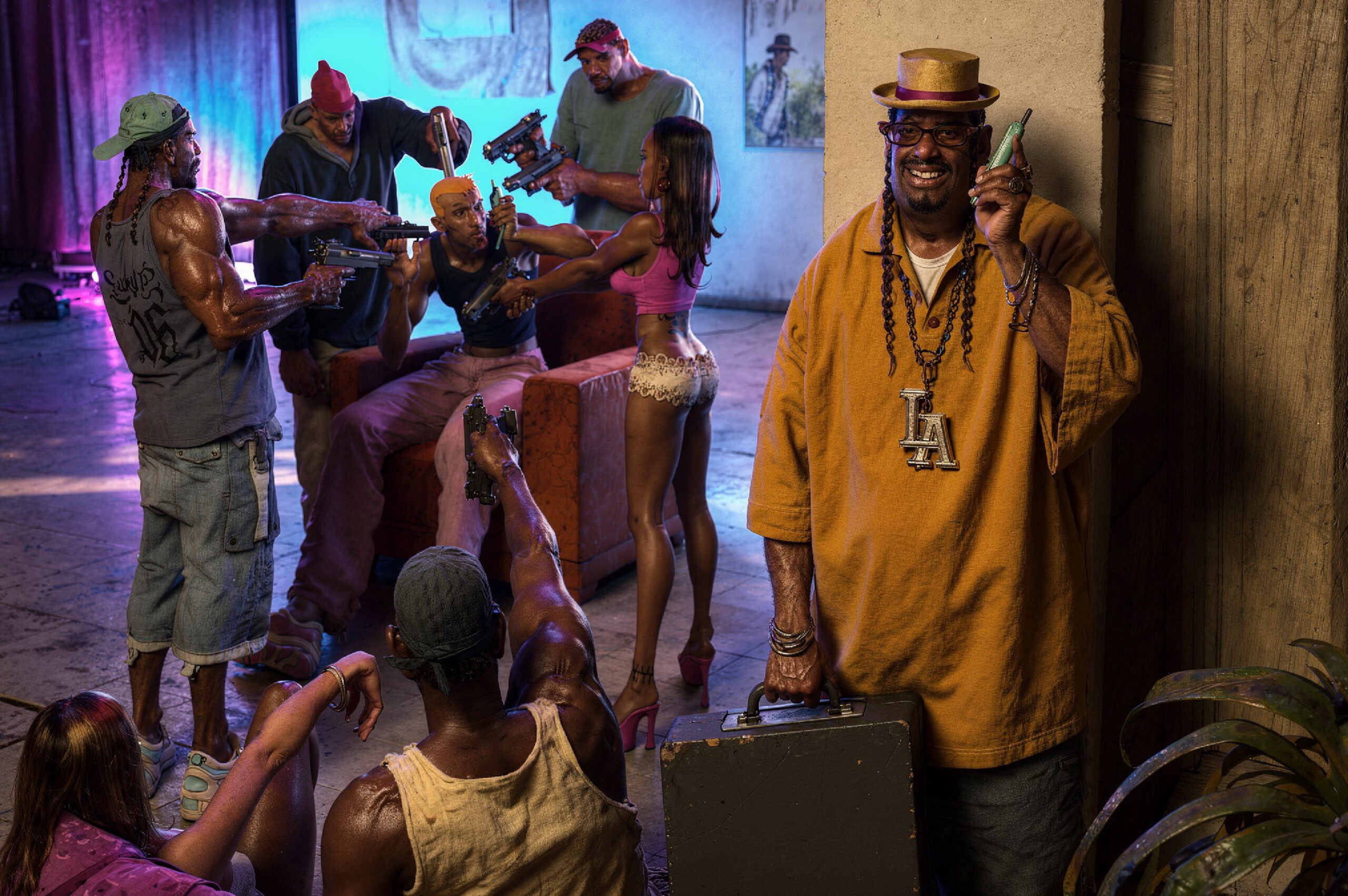
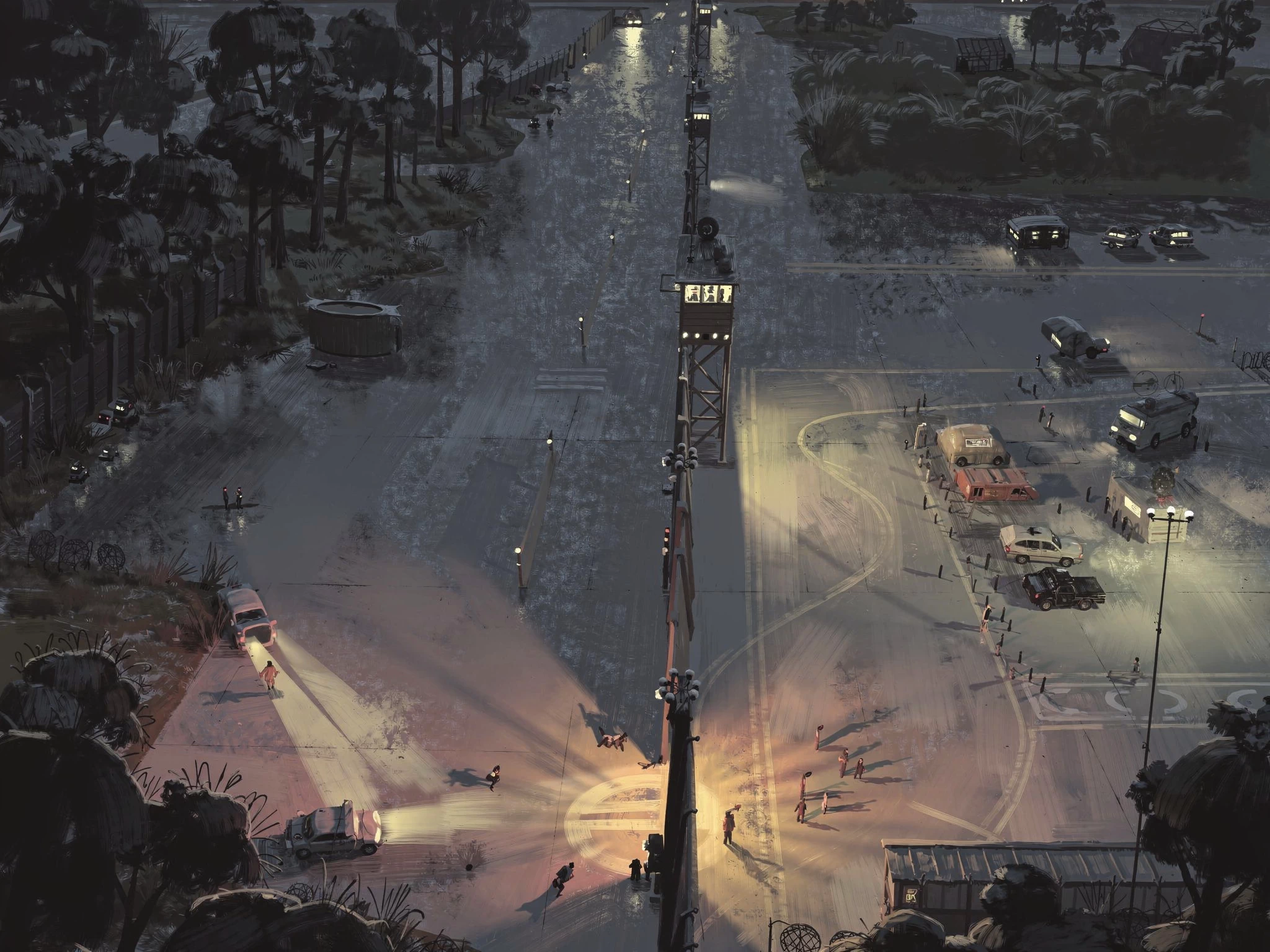
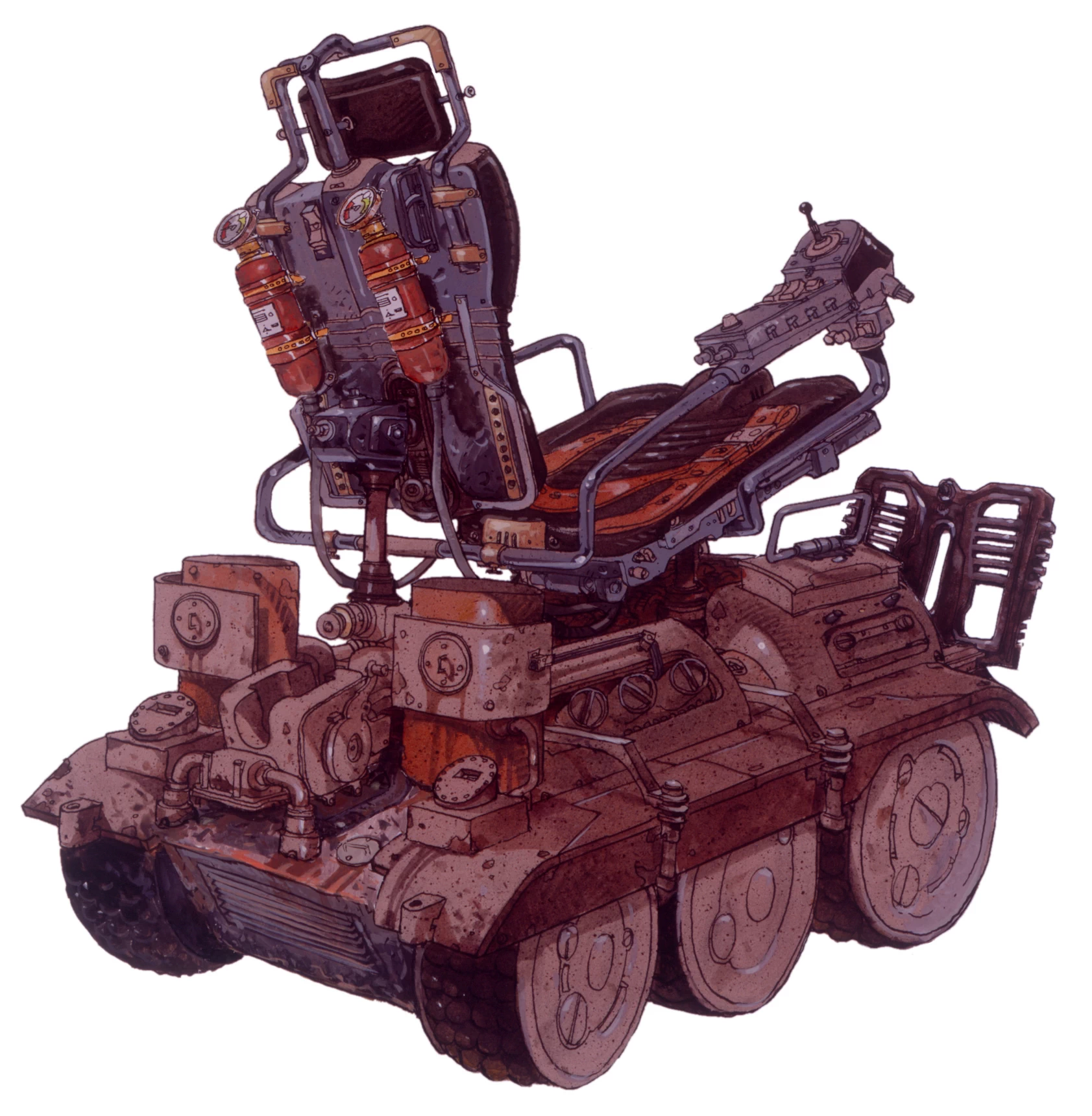
Typically, concept art is created at the earliest phase of a project, before the crew is assembled. The volume of concept art created depends largely on the available budget and the requirements of the film genre at hand. Directors often pay for this phase of the work out of pocket if they believe it will help them clinch a deal. Once the phase known as pre-production begins, illustrators may be hired by the production designer to refine the initial concept art or depart from it entirely. In reality, these phases of work tend to overlap…
If there are any notable differences between a concept artist and a film illustrator, it may be that a concept artist works on a broad imaginative scale whilst few limitations have been imposed and the director likes to explore ideas… A film illustrator on the other hand works for the production designer and specifically answers to them. Typically, an illustrator works on detailing designs to make them practical.
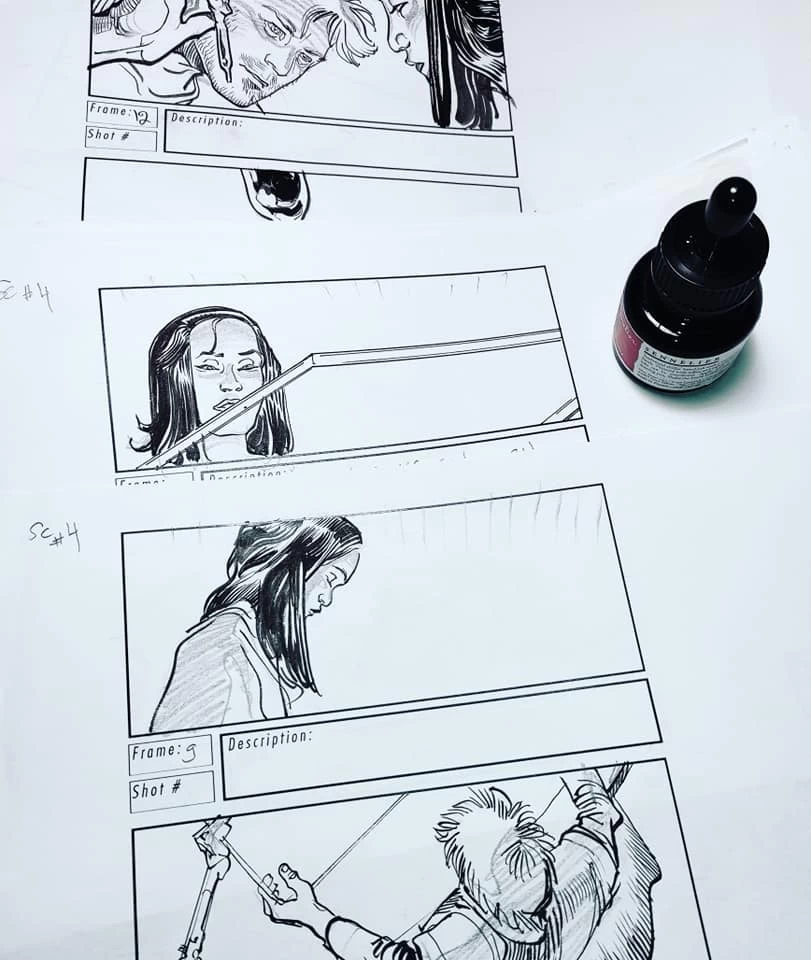
What are storyboards?
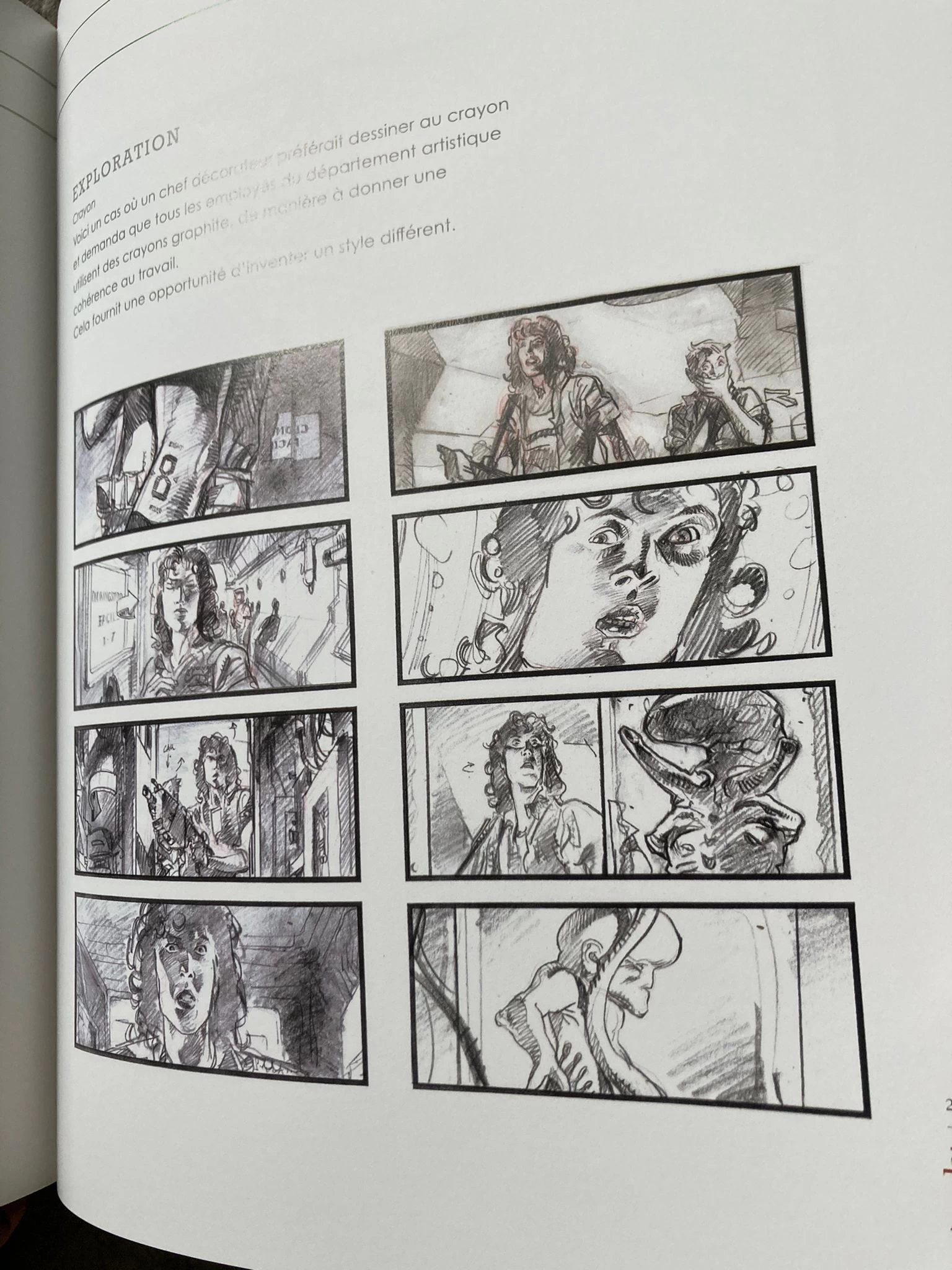
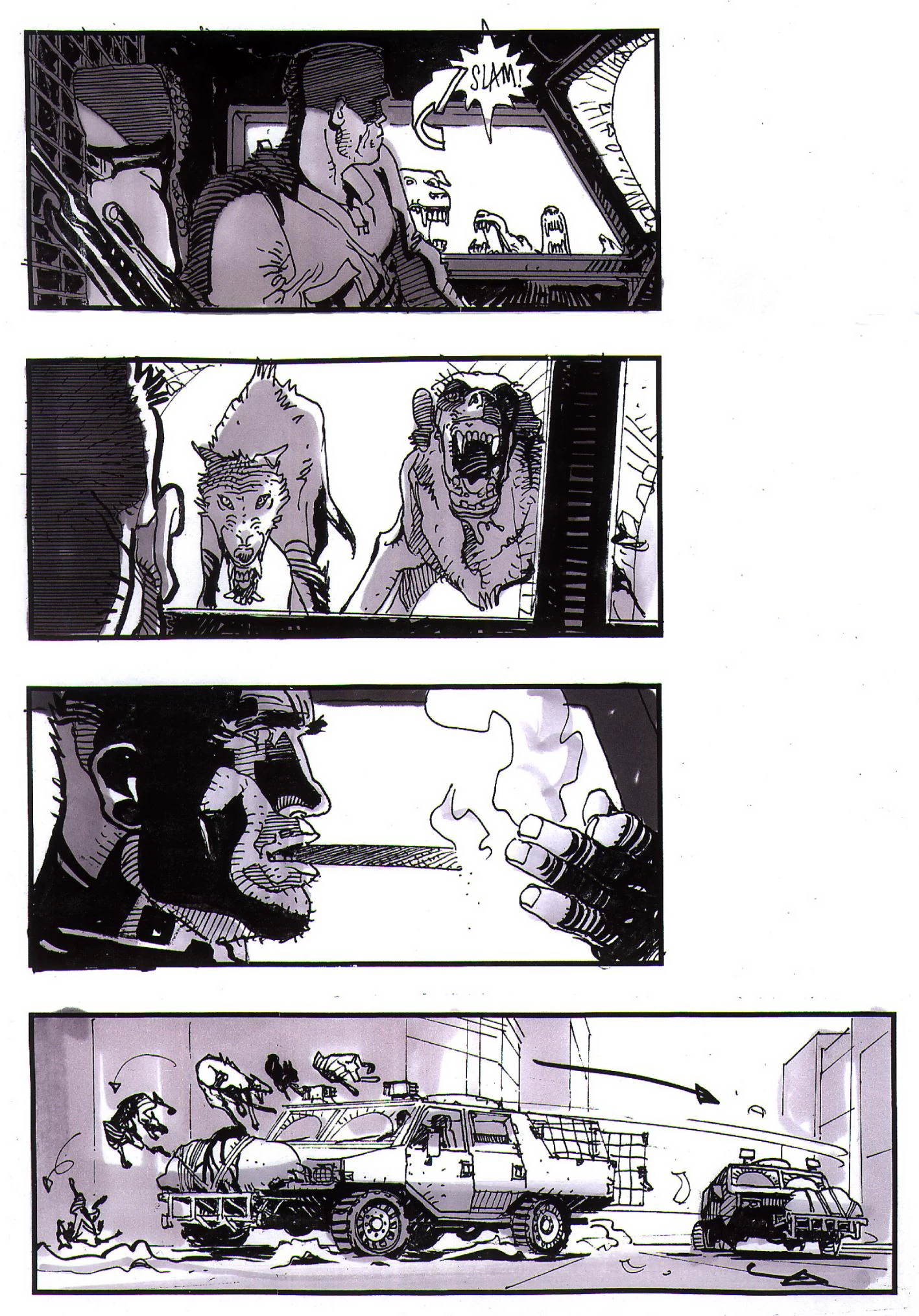
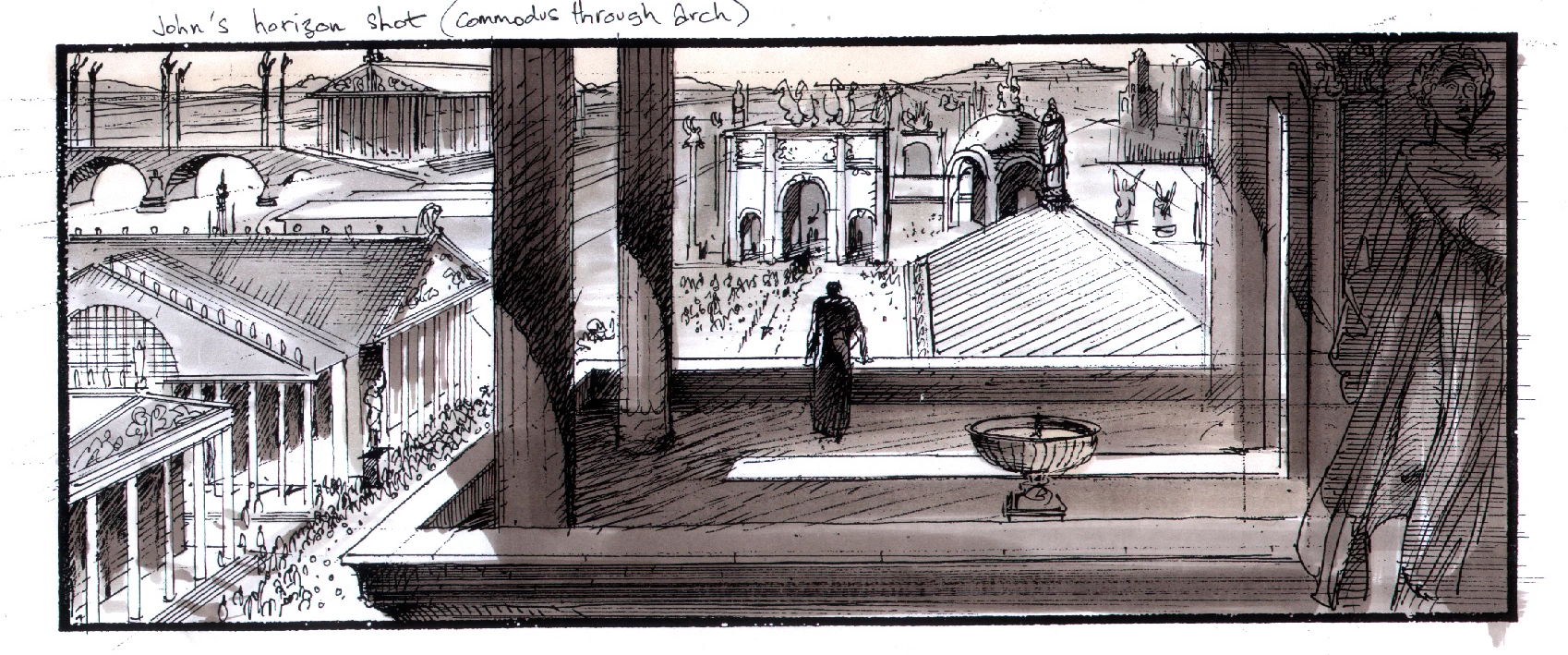
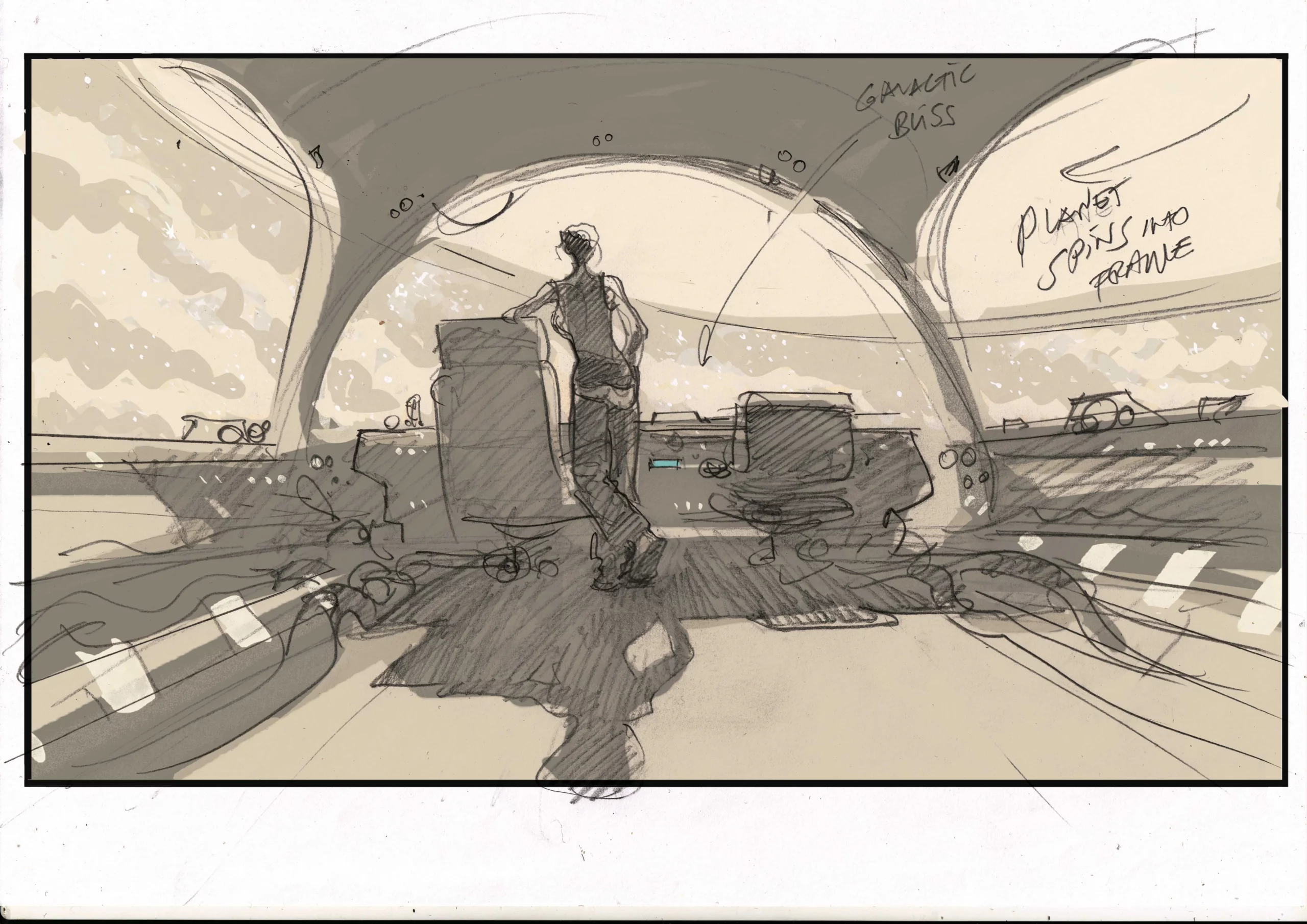
Storyboards are impossible to define in that they are a mere accessory of the director’s toolbox. Each director is different, which means that each storyboard should be different, work differently, and serve a different purpose… In an ideal world, a director should do the storyboard himself (or herself) as it is up to them to establish a grammar for blocking and staging their film. But in reality, few directors can spare the time, and fewer still can draw well enough to capture the full array of complex elements needed to represent options in framing, staging, and playing with the geometry of graphic ideas. In fact even storyboard artists, for the most part, lack that skill. For those reasons, it is hard to talk about what storyboards are and what they do.
One thing is certain: a storyboard is only as good, as useful, and as thoughtful as the director of the film itself.
It is a reflection of that director’s knowledge and intentions.
At the bottom line, a storyboard is a quick, and affordable way for the filmmakers to consider the breakdown of some, or all of their scenes, prior to getting-in too deep with commitments only to find that an approach that was desired doesn’t really work. The more visually sophisticated the director, the more useful a storyboard is going to be in helping them secure the bridge between their initial vision and precise accomplishment onscreen of that initial vision. For those reasons, no two directors have the same view of the usefulness of the process. Obviously, directors who aren’t comfortable with visual craft do not use them well.
Storyboards are not helpful if director is not able to visualize, and therefore is not hung-up on micromanaging the film’s visual strategy; filmmakers who are visually unskilled defer to their director of photography for camera placement, and to their editor for a cutting room strategy. Conversely, it’s hard to imagine a visually sophisticated director being able to obtain a desired intention, shot by shot, without a high level of preparation in the design, cinematography, and editing departments, to say nothing of the preparations required in finessing the script and rehearsing with actors.
There are no rules, and no measurable absolutes, and for those reasons, many people do not know what to expect of a storyboard artist.